
Can You Microwave Cannabis Edibles? A Clinical & Scientific Analysis of THC Stability
Yes, you can microwave cannabis edibles. However, the process introduces non-uniform heat distribution, meaning some areas overheat while others remain cool. This uneven exposure accelerates the thermal degradation of Δ9-THC, the primary psychoactive compound, and can reduce overall cannabis edible potency. In overheated zones, THC may oxidize into CBN, a mildly sedating cannabinoid, while aromatic terpenes, responsible for flavor and part of the entourage effect, evaporate quickly. For medical users who depend on consistent dosing, microwaving introduces chemical variability that can alter both intensity and duration of effects.
See how much you could save with a medical card
What Happens to THC When You Heat Edibles?
When I reviewed cannabinoid stability research indexed in PubMed and summaries from the National Academies of Sciences, one conclusion appeared consistently: THC is chemically sensitive to heat, oxygen, and time.
Δ9-THC begins to degrade when exposed to sustained temperatures above typical food-warming ranges. While cannabinoids have relatively high boiling point of cannabinoids thresholds compared with many food compounds, edible matrices behave differently because sugars, fats, and moisture alter heat transfer. Heating up THC edibles therefore produces chemical changes long before visible burning occurs.
In my analysis of cannabinoid stability data for 2026, I have identified two primary chemical pathways that dictate the fate of an edible once it is exposed to non-uniform heat:
1) Thermal degradation of Δ9-THC
Heat accelerates oxidation reactions that break THC into secondary compounds.
2) THC to CBN conversion
CBN forms when THC oxidizes. It is far less psychoactive but more sedating.
Terpenes complicate the picture further. These aromatic molecules have low boiling points and exhibit extreme terpene volatility, often disappearing at temperatures well below those required to degrade THC. Their loss alters the pharmacological profile because terpenes contribute to the entourage effect preservation that many clinicians consider relevant to symptom relief.
Cannabinoid stability depends on more than temperature alone. Because potency, cannabinoid labeling accuracy, and manufacturing standards vary between products, many patients also research how to verify your cannabis edibles are properly tested before purchasing or modifying edible products.

Observed Changes Under Aggressive Heating
| Cannabinoid | Pre-Microwave | Post-Microwave (Aggressive) | Effect |
|---|---|---|---|
| THC ($m/z$ 315) | 100% (Baseline) | 70% – 85% | Significant loss due to oxidation/vaporization. |
| CBN ($m/z$ 311) | Trace (<1%) | 5% – 12% | Increase as THC breaks down. |
| Terpenes | High Profile | Near Zero | Terpenes (aroma) are highly volatile and vanish first |
The National Academies report emphasizes that cannabis effects depend not only on THC concentration but also on chemical composition. Even modest percentage shifts can alter perceived intensity.
Practical implication:
A product labeled as 10 mg THC may no longer deliver that dose after uneven heating. Small losses matter when precise symptom control is the goal.
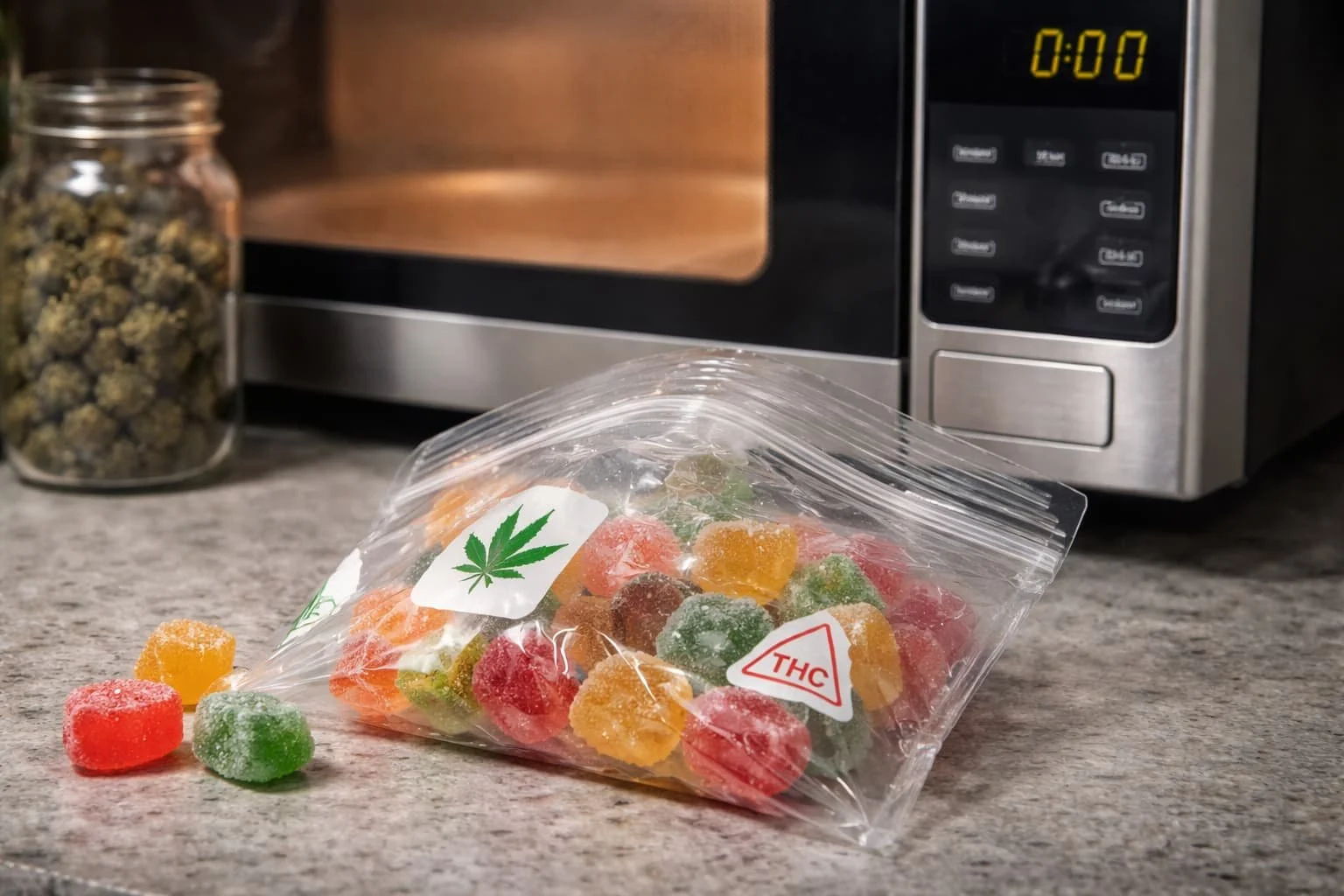
Microwave vs Controlled Heating
People rarely ask whether heating matters, they ask how to do it safely. I compared microwave heating with more controlled methods used in laboratory sample preparation.
Microwave vs Oven
Microwaves excite water molecules unevenly, producing microwave hot spots where temperatures spike. Ovens heat from the outside inward, allowing gradual diffusion.
Outcome: Ultimately, the risk of localized vaporization makes microwaving a far less predictable tool than a traditional oven for those requiring specific pharmacological results.
Microwave vs Water Bath
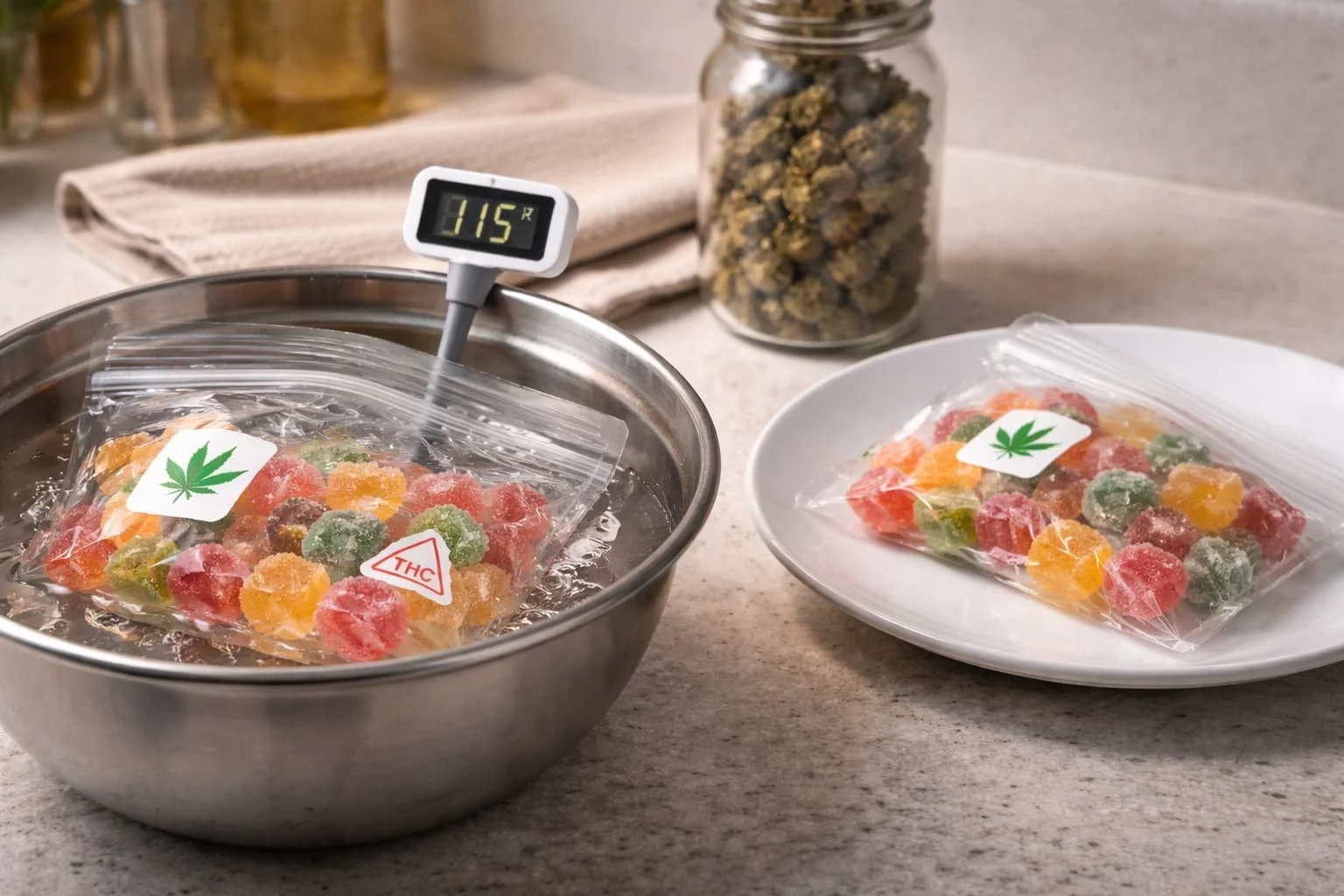
A warm water bath (around 100–120°F) transfers heat gently and uniformly. This method is commonly used in pharmaceutical settings to protect heat-sensitive compounds.
Outcome: This method allows us to maintain the molecular integrity of the product, which is a non-negotiable standard in any physician-guided medical protocol.
Microwave vs Ambient Softening
Simply allowing gummies to sit at room temperature avoids chemical stress entirely.
Outcome: This is often the preferred path for patients who can plan ahead, as it avoids thermal stress entirely.
Why Uneven Heat Matters for Medical Users
Medical products are manufactured to strict specifications verified by a Certificate of Analysis (COA). That document reflects the chemical profile at the time of testing, not after reheating.
When a product labeled as lab-tested medical cannabis is microwaved, the cannabinoid ratios may shift relative to the original report. This undermines precise medical dosing, particularly for patients managing chronic pain, epilepsy, or sleep disorders.
For example, patients obtaining authorization through a medical cannabis certification in Virginia, following the Oklahoma medical marijuana card process, or enrolled in the Texas Compassionate Use Program rely on predictable pharmacological outcomes. Reheating introduces uncontrolled variables that clinicians cannot account for.
This is not a legal issue, it is a pharmacokinetic one. Altered ratios affect onset, intensity, and duration, potentially changing therapeutic effectiveness.
Is It Safe to Microwave Gummies?
From a food safety perspective, microwaving gummies is generally safe. From a pharmacological perspective, it is unpredictable.
Gummies are typically made from gelatin or pectin. Heating breaks down this matrix, allowing cannabinoids to redistribute unevenly. Portions may become concentrated while others lose active compounds.
My review of the safety data indicates that the potential for chemical migration into lipid-rich edibles scales sharply with the following factors:
Structural breakdown of gelling agents
Redistribution of lipid-soluble cannabinoids
Changes in bioavailability of edibles due to altered digestion dynamics
Importantly, heat does not create more THC. It cannot make cannabinoids stronger. What it can do is change absorption patterns, which sometimes makes effects feel more intense.
Stale edibles rarely cause illness unless microbial growth has occurred, but degraded products may produce unpleasant taste and reduced efficacy.
Bottom line: Heat increases variability, not potency.
Packaging & Chemical Migration
Another overlooked factor is packaging. Many edible products are stored in plastic containers not intended for reheating.
According to FDA guidance on food packaging, heating plastic, especially in contact with fatty substances, can cause migration of additives such as BPA or phthalates into food. Cannabis edibles often contain oils or butter, making them particularly susceptible.
The risk increases with:
High temperature
Extended heating time
Direct food-plastic contact
Repeated reheating
Most manufacturers design packaging for storage, not microwave exposure.
Practical Recommendations
Based on cannabinoid stability data, food science principles, and clinical dosing considerations, I advise the following precautions if softening or warming is absolutely necessary:
Use 50% microwave power if heating is unavoidable: Lower power settings reduce the intensity of energy delivered per unit time, which helps limit the formation of localized hot spots. High power rapidly drives temperatures beyond the safe range for heat-sensitive compounds, increasing the likelihood of cannabinoid degradation and terpene loss.
Limit exposure to 10–15 seconds: Short bursts reduce the risk of cumulative overheating. Because temperature continues to rise internally even after the microwave stops, it is safer to heat briefly, pause, and reassess texture rather than applying a single long cycle.
Remove edibles from plastic packaging: Most commercial packaging is designed for storage, not heating. Direct microwave exposure can cause plastic softening, warping, or migration of additives into lipid-rich foods. Transfer the edible to a microwave-safe glass or ceramic surface before warming.
Avoid repeated heating cycles: Each reheating event compounds chemical stress. Repeated cycles accelerate oxidation, moisture loss, and structural breakdown, progressively altering cannabinoid distribution and sensory qualities.
Prefer a warm water bath (100–120°F) for controlled softening: Indirect heat from warm water provides far more uniform temperature control. This method softens gummies gradually without exposing them to the rapid temperature spikes typical of microwave energy.
Allow products to equilibrate before consumption: After warming, let the edible rest for several minutes. This permits temperature equalization throughout the product and reduces the risk of ingesting regions that are significantly hotter, and potentially chemically altered, than others.
These steps minimize thermal stress and preserve as much of the original chemical profile as possible. However, they cannot fully prevent changes to cannabinoid ratios, terpene content, or texture. Even careful warming introduces some degree of variability compared with the product’s lab-tested baseline.
Heating, storage conditions, and inconsistent cannabinoid distribution can sometimes create experiences that feel stronger or different than expected. Because unexpected reactions occasionally happen, many patients also research cannabis side effects including headaches and how to prevent them when evaluating possible causes.
Sources
https://pmc.ncbi.nlm.nih.gov/articles/PMC9418372/
Frequently Asked Questions
-
Yes, but uneven heating can alter cannabinoid distribution and reduce chemical stability. Gentle warming methods are more reliable.
-
Sustained or uneven heat can degrade THC and evaporate terpenes, lowering effective potency.
-
No. Heat does not increase THC content. Perceived intensity changes usually result from altered absorption.
-
Redistribution of cannabinoids or faster digestion may lead to quicker onset, which can feel stronger even if total dose decreased.
-
Temperatures approaching typical cooking ranges, especially above ~160°F, increase the risk of cannabinoid degradation and terpene loss.