
How To Get an Ohio Medical Marijuana Card
Getting a medical marijuana card in Ohio is a straightforward process once you know what to expect. This guide walks you through every step of the process; from checking your eligibility and gathering documents to completing your doctor's evaluation and downloading your official state card.
Whether you are applying for the first time or checking your eligibility, reviewing the core process for an Ohio medical marijuana card will help you prepare for your evaluation and state registration.
Who Can Get an Ohio Medical Marijuana Card?
To register as a medical cannabis patient in Ohio, you need to meet three basic requirements:
Ohio Residency: You must live in Ohio and show a valid, unexpired state driver’s license or state ID.
Qualifying Condition: You need a diagnosis for at least one medical condition approved by the state. Common qualifying conditions include chronic pain, PTSD, cancer, and migraines.
Doctor Evaluation: An Ohio-licensed physician with an active Certificate to Recommend (CTR) must review your medical history and determine whether you meet Ohio’s requirements for medical cannabis certification
Ohio currently recognizes 26 qualifying medical conditions, and some additional diagnoses are already covered through existing categories. See the full Ohio medical marijuana qualifying conditions guide.
For current pricing, online appointment options, renewals, and service details, visit our Ohio medical marijuana card page.

How to Get Your Ohio Medical Marijuana Card Online
Step 1: Schedule Your Online Evaluation
Your first step is booking a virtual appointment with a state-approved physician. You can browse online schedules to find a day and time that works best for you.
Before your visit, you’ll fill out simple intake forms online. These ask for basic details about your health history, current symptoms, and any medications you currently take.
Filling these out accurately ahead of time gives your doctor the context they need to review your history quickly during your visit.
Step 2: Meet With an Ohio Physician
During your online appointment, you’ll talk directly with an Ohio doctor over video or phone. They will review your health forms, talk through your condition, and go over any questions you have.
This conversation is your chance to ask questions about the Ohio medical cannabis program and the certification process
When the physician determines that certification is appropriate, they can submit a recommendation to the Ohio patient registry .
Step 3: Receive Your Physician Certification
Once the doctor approves your evaluation, the recommending physician submits your certification information to the Ohio patient registry.
Shortly after, you’ll receive an email from the state registry. Follow the registry email instructions to complete your patient registration and access your registry identification card.
Step 4: Activate Your Account in the Ohio Registry
To finish the process, click the link in the state email and log into the Ohio registry portal.
After verifying your personal details, you can download your official digital card right to your phone or computer. You can also print a hard copy to bring with you to licensed dispensaries.
Documents to Prepare Before Your Appointment
Keep this part simple. Have your Ohio ID and the medical information you already have available for your appointment. You do not need to build a large paperwork file before booking.
If another physician previously diagnosed your qualifying condition, your Ohio physician can explain what records or supporting information are relevant for confirming that diagnosis.
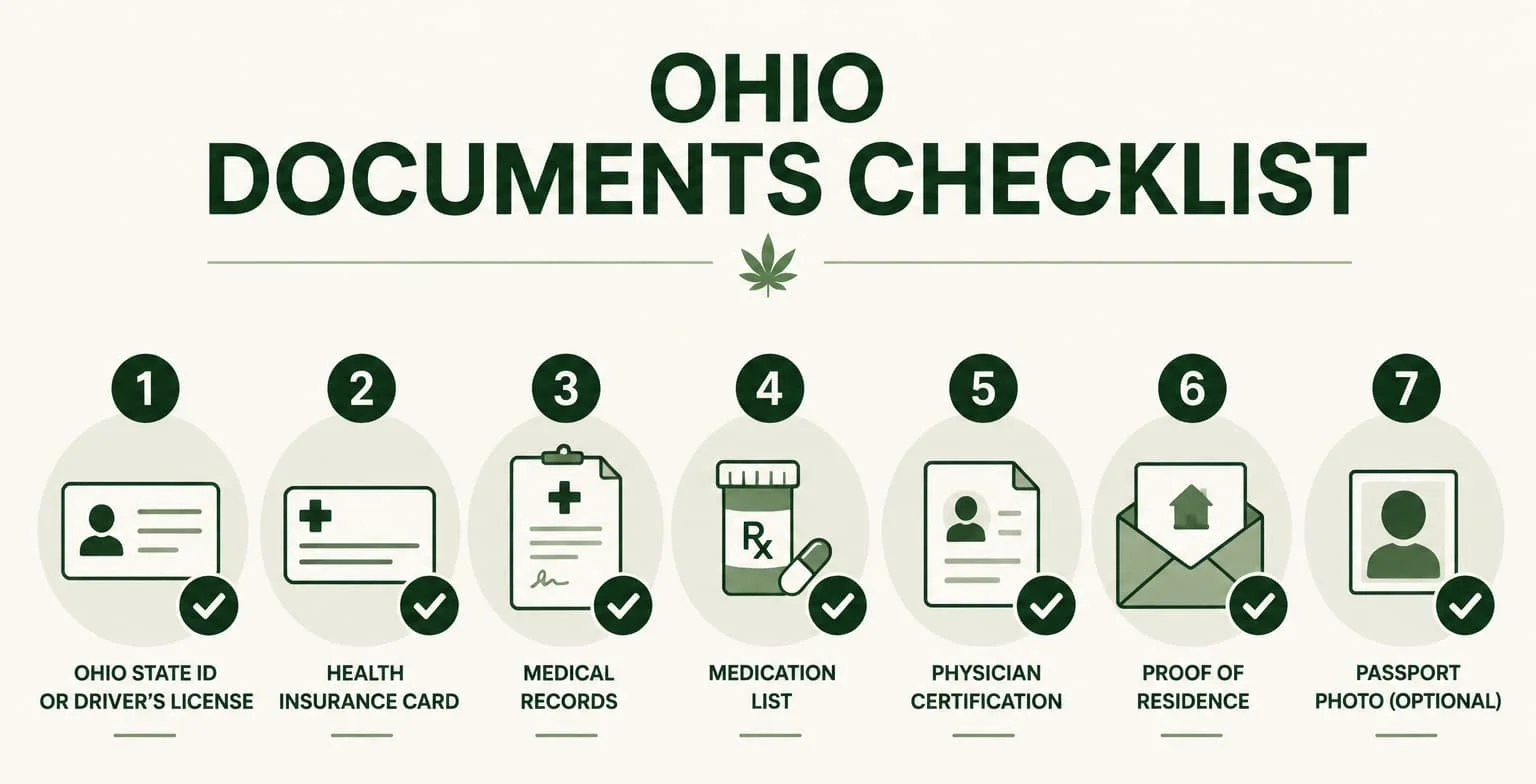
While an unexpired Ohio driver's license or state ID is required to confirm identity and residence, having your health insurance card, diagnostic records, and current medication list helps your physician verify your qualifying condition efficiently.
Required & Recommended Document Breakdown
| Document | Required Status | Purpose |
|---|---|---|
| Ohio State ID / Driver's License | Required | Verifies age and state residency |
| Medical History Summary | Recommended | Outlines diagnoses and past treatments |
| Previous Medical Records | If Available | Supports diagnostic verification |
| Current Medication List | Recommended | Assists physician with safety reviews |
How Long Does the Process Usually Take?
While many patients complete their registration within a few business days, overall turnaround time varies depending on appointment availability and how quickly you set up your state account.
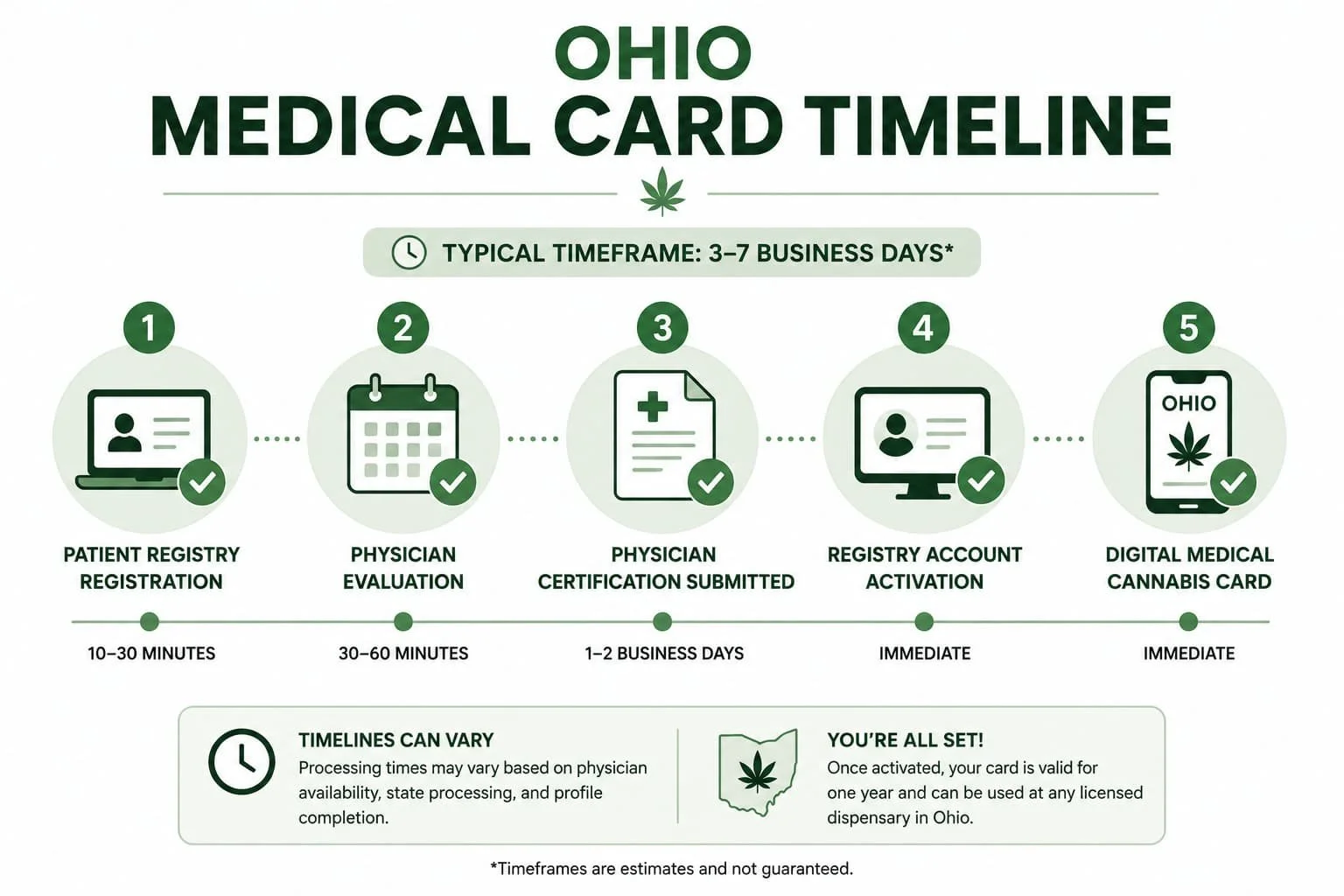
As shown in the timeline above, completing your intake, meeting with your doctor, and finalizing your account setup happens in distinct stages. Booking the earliest available appointment slot and responding promptly to state registry emails are the best ways to keep your application moving without unexpected delays.
Common Mistakes to Avoid
Entering the Wrong Email Address: Typing your email incorrectly on your intake forms means you won't receive the state's registration link, holding up your card.
Using an Expired State ID: An expired ID can prevent your registration from being completed until valid identification is provided.
Booking Under a Nickname: The name on your intake forms, medical records, and state ID must match exactly. Mismatched names cause verification failures in the state system.
Stopping After the Doctor Visit: A doctor’s recommendation isn't a card. You cannot purchase medical cannabis until your patient registration is active and you have access to your registry identification card.
Waiting Too Long to Renew: Letting your annual recommendation expire creates a gap where you can't buy medical products until you complete a new evaluation.
Can You Renew an Ohio Medical Marijuana Card Online?
Yes. Ohio patient registrations are generally valid for one year. To renew, patients need an updated physician recommendation and must complete the renewal steps through the Ohio Patient Registry before their current registration expires. Once submitted, you simply log into your state account to finalize your renewal for another year.
Understanding Ohio Medical Cannabis Rules
While Ohio now allows adult-use cannabis, the medical program offers registered patients extra benefits, distinct legal protections, and dedicated patient support.
Because state rules and policies can change, checking official state resources regularly helps ensure you stay up to date on current regulations.
Learn more about Ohio medical marijuana rules and benefits → Visit our main Ohio Medical Marijuana Card page for a complete breakdown of current laws and program perks.
Have questions about the Ohio Registry, renewals, caregivers, medical vs. adult-use cannabis, or other program rules? See our complete Ohio medical marijuana FAQ.
Is a Medical Marijuana Card Still Worth It in Ohio?
For some Ohio residents, staying registered in the medical cannabis program may still offer practical advantages even though adult-use sales are legal.
Registered patients remain part of Ohio’s separate medical cannabis program and may be eligible to designate a caregiver under current state rules. Medical purchases are also not subject to Ohio’s additional 10% adult-use excise tax, although other taxes and dispensary pricing may still apply.
The value of maintaining a medical card depends on your individual situation, purchase habits, and preference for participating in the state’s regulated medical program.
To compare medical and adult-use cannabis rules in more detail, visit our main Ohio Medical Marijuana Card page.
Step-by-Step Overview
Here is a quick visual summary of how the application journey unfolds from start to finish.
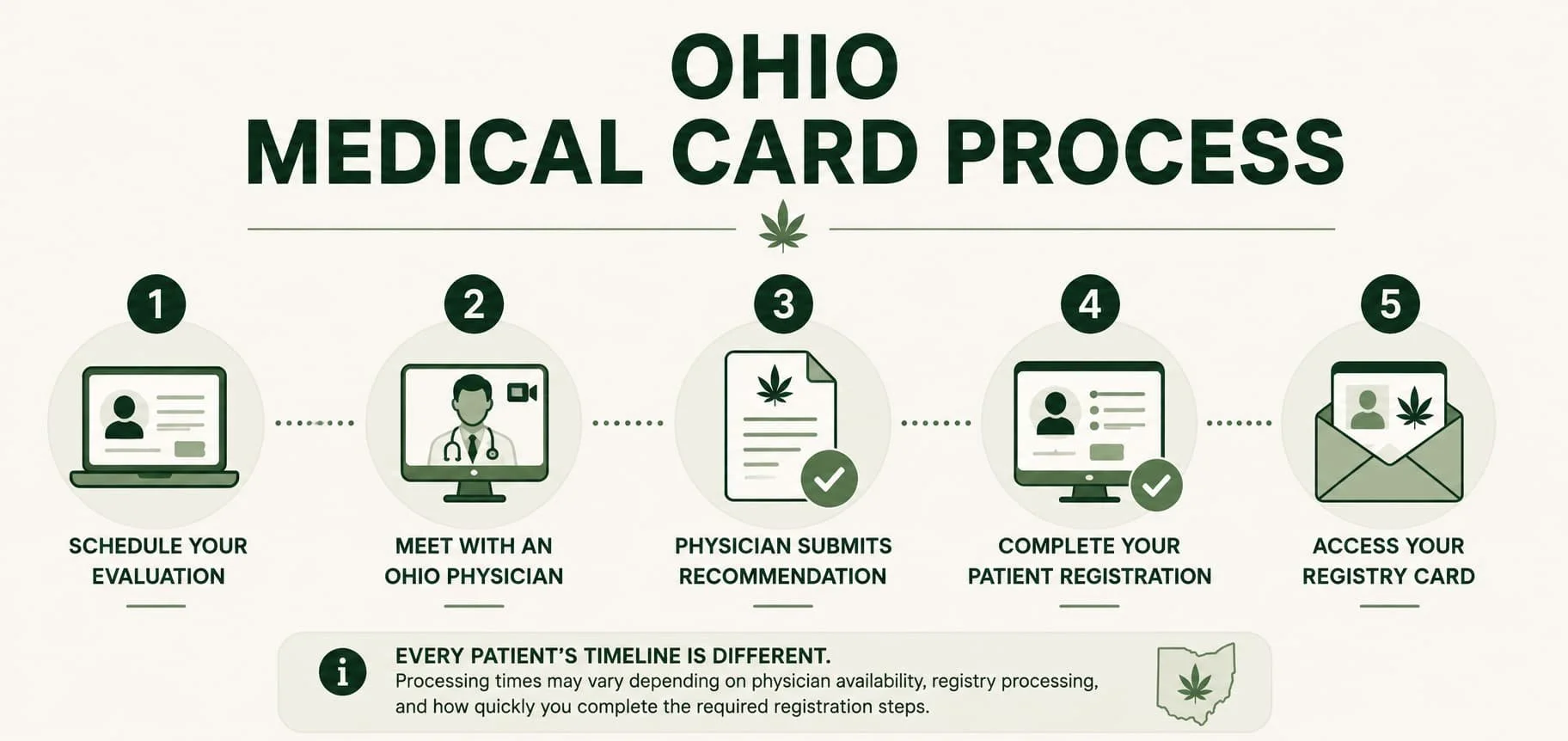
In short, you'll start by registering online, meeting with a certified doctor, and receiving your physician approval. From there, you'll complete your registry account details and instantly download your active card.

Ready to Take the Next Step?
If you are ready to speak with a licensed professional and begin your certification journey, visit our Appointments Page to learn more or schedule your online evaluation today.
FAQs
-
While records help confirm your diagnosis faster, doctors can review your health history during your appointment to see if you qualify.
-
Visits usually last 10 to 15 minutes. That's plenty of time for the doctor to review your forms, discuss your health history, and answer questions.
-
You'll get an email from the state registry. Click the link inside, set up your password, and download your card.
-
Yes. Eligible patients may designate a registered caregiver through the Ohio patient registry. Caregiver eligibility and registration requirements depend on current state rules.
-
You may use a different Ohio physician with an active Certificate to Recommend for a future renewal. The new physician will need to review your information and submit the updated recommendation through the registry.
-
Medical purchases are not subject to Ohio’s additional 10% adult-use excise tax. Registered patients also remain part of Ohio’s separate medical cannabis program and may use registered caregivers when eligible. Product availability varies by dispensary.
Looking for answers beyond the application process? Visit our complete Ohio medical marijuana FAQ.
References
The information in this guide is based on official Ohio regulations and trusted medical resources. Because state laws and program requirements may change, always refer to the sources below for the most current information:
Ohio Division of Cannabis Control - Official guidance on program regulations, operational rules, and patient compliance.
Ohio Medical Marijuana Registry Portal - Patient registration management, profile access, and registry card instructions.
Ohio Revised Code - Official statutory provisions governing cannabis regulation and patient care in Ohio.
National Cancer Institute (NCI) - Educational and clinical reference materials on cannabis and cannabinoids in health management.
National Center for Complementary and Integrative Health (NCCIH) - Scientific information and research updates regarding cannabinoid research.