Hemp THC products and medical cannabis may originate from cannabis plants, but Virginia regulates them through different legal frameworks. The main differences involve THC limits, product oversight, testing requirements, where products are sold, and whether the purchaser needs a medical certification. Choosing between these systems requires a clear understanding of how state law distinguishes between the two categories.
Medical Cannabis and Hemp Have Different Legal Definitions
The legal distinction between medical cannabis and hemp in the Commonwealth is determined primarily by specific chemical thresholds and regulatory classifications rather than botanical origin alone.
How Virginia Defines Medical Cannabis and Marijuana
Under current Virginia statutory terminology, marijuana is legally defined as any part of the plant cannabis sativa, whether growing or not, including its seeds, resin, and every compound, manufacture, salt, derivative, mixture, or preparation. Medical cannabis refers specifically to products cultivated, processed, and distributed by a small number of state-permitted pharmaceutical processors. The state avoids oversimplifying every product above a 0.3% delta-9 THC threshold as automatically qualifying as medical cannabis; instead, to fall within the medical program, the product must be formally produced and tracked within the state's tightly monitored medical infrastructure.
How Virginia Defines Hemp and Hemp Products
Virginia law defines industrial hemp and hemp-derived products using distinct plant-level and product-level criteria. At the agricultural level, hemp is defined as the plant cannabis sativa that possesses a total delta-9 tetrahydrocannabinol (THC) concentration of no more than 0.3% on a dry weight basis. At the retail level, Virginia imposes a strict product framework. Current rules generally require over-the-counter hemp products to remain at or below a 2 mg total THC limit per package.
However, products exceeding this 2 mg package threshold may currently qualify for legal retail sale if they satisfy a mandatory 25:1 CBD-to-total-THC compliance route. Total THC calculations are strict and incorporate delta-8, delta-9, and all other active THC isomers. Retailers must also comply with product-specific retail requirements, including age verification and registration.
Licensed Medical Dispensaries vs. General Hemp Retailers
Where you buy cannabis products in Virginia dictates the level of oversight, the required documentation, and the types of formulations available on the shelves.
Who Regulates Virginia Medical Cannabis Dispensaries?
The Virginia Cannabis Control Authority (CCA) is the primary state agency responsible for governing the medical cannabis program. The CCA oversees the licensing of pharmaceutical processors, sets structural security rules for facilities, tracks patient access metrics, and ensures that the medical market functions in strict accordance with statutory mandates.
Who Regulates Retail Hemp Products?
Retail hemp products are currently monitored under a separate framework administered by the Virginia Department of Agriculture and Consumer Services (VDACS). Under this setup, businesses selling consumable hemp products must complete a formal retailer registration process and adhere to specific storage, disclosure, and manufacturing standards. While an administrative proposal aims to transfer intoxicating hemp oversight to the CCA to consolidate state cannabis enforcement, the current day-to-day retail marketplace remains divided between these separate systems. For a detailed breakdown of how this consolidated oversight could change your personal retail options, check our analysis on whether a Virginia medical marijuana card is still worth it.
How Product Testing Requirements Differ
Both medical and hemp frameworks implement chemical analysis rules, but the scope, tracking, and enforcement of these testing protocols vary between the two state structures.
Testing Within Virginia’s Medical Cannabis Program
Virginia’s medical cannabis testing requirements vary by product type rather than applying one identical panel to every item. For cannabis oil products, the state requires pass/fail laboratory analysis for microbiological contaminants, mycotoxins, heavy metals, pesticide chemical residues, and residual solvents. For botanical cannabis products, the required testing panel includes microbiological contaminants, mycotoxins, heavy metals, pesticide chemical residues, water activity, and moisture content.
That distinction matters when comparing medical cannabis with retail hemp products. A patient should not assume that flower, extracts, edible formulations, and oil-based products all move through one identical testing framework just because they are sold through the same regulated medical channel.
Testing and Documentation for Virginia Hemp Products
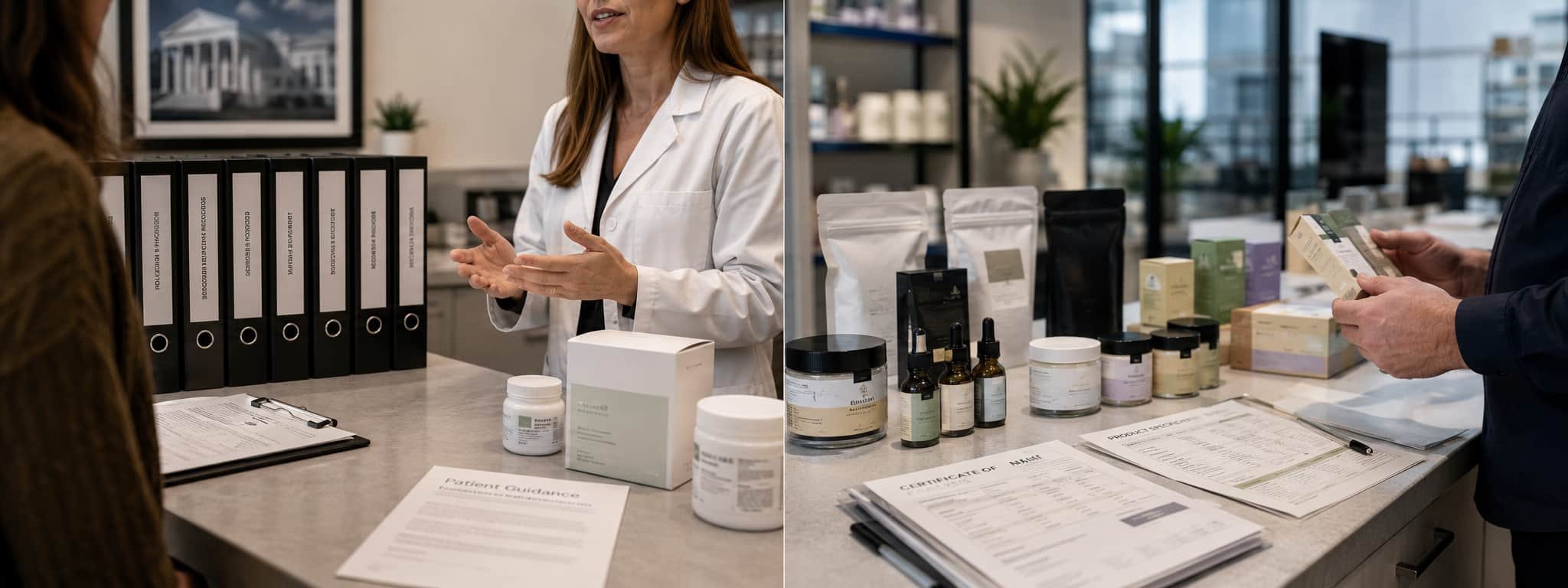
Virginia hemp rules also address consumer transparency through independent testing mandates. VDACS requires relevant edible hemp products to have a Certificate of Analysis (COA) from an independent, ISO/IEC 17025-accredited laboratory. Retailers are legally required to maintain this documentation, making it available to regulators or customers looking to verify product contents.
Why a COA Does Not Replace Regulatory Oversight
While a COA is an excellent tool for transparency, it is essential to understand its limits:
Batch Alignment: The COA must precisely match the product batch number and manufacturing date on the retail package; an outdated or generic report is functionally invalid.
Accreditation Checks: The lab performing the analysis must hold verifiable, active accreditation from recognized oversight bodies.
Compliance vs. Chemistry: A laboratory report simply reflects chemical composition at a single moment in time. It does not by itself prove that a retail item satisfies every branding, packaging, or serving limit required under broader state consumer protection laws.
Labeling, Packaging, and Product Tracking
The logistical pathway from seed to sale dictates how products are marked, tracked, and secured in Virginia.
Medical cannabis products are routed through a closed-loop electronic system. Every step of cultivation, processing, and transportation is logged, allowing state officials to monitor inventory controls down to the specific retail facility. Labels within this system must clearly print total milligrams of active cannabinoids, clear batch identification tracking data, and standardized state health warnings. Furthermore, all medical containers must use strict, child-resistant packaging.
Hemp retail items operate under general commercial shipping models. Manufacturers must apply compliant labeling that includes clear total THC disclosures, child-resistant closures for certain edible forms, verifiable batch codes, and accessible QR codes or barcodes that link directly to the corresponding laboratory COA. However, hemp retailers manage inventory through traditional commercial documentation rather than an integrated state-monitored tracking database.
Product Selection and Pharmacist Availability
A unique structural pillar of Virginia’s medical program is the mandated presence of authorized professionals at the point of sale. By law, licensed medical cannabis dispensaries must have a registered pharmacist or an authorized healthcare professional available on-site or via secure electronic communication during operational hours to answer patient questions. These professionals help clarify product types and explain how different formulations interact within the body. However, they do not provide custom treatment planning, therapeutic dosing schedules, guaranteed clinical outcomes, or absolute promises of symptom relief. General hemp stores do not operate under a pharmacist requirement, and staff are not subject to equivalent medical licensing laws.
How the Proposed 2026 Hemp Changes Could Affect the Comparison
The regulatory boundary between these two categories may soon shift due to recent state actions. As part of the June 2026 Virginia cannabis agreement, policymakers announced a transition framework that would significantly alter over-the-counter retail options. The new proposal would end the 25:1 pathway, effectively closing the loophole that permits higher-THC hemp items on conventional shelves.
Additionally, the plan calls for moving intoxicating hemp oversight to the CCA to create a centralized regulatory front. If implemented, some retail hemp products may need extensive reformulation or a different legal route to remain accessible. To explore how these structural changes might impact what you see on store shelves over the coming year, review our full summary of Virginia’s proposed hemp THC restrictions.
Which Products Require a Medical Cannabis Certification?
Navigating consumer access in Virginia requires knowing which credentials open specific retail doors:
Dispensary Restrictions: Making a purchase at any licensed medical cannabis dispensary requires a valid written certification from an eligible practitioner alongside a government-issued photo ID.
Hemp Requirements: General hemp purchases do not require a medical certification. Consumers can browse these products openly, provided they meet applicable hemp age restrictions (typically 21 and older) and purchase from registered retailers.
Legal Boundaries: Holding a medical credential allows an individual to buy from specialized medical facilities, but a medical certification does not authorize every type of cannabis transaction or shield individuals from local possession limits outside state program rules.
How Existing Patients Can Maintain Dispensary Access
If you decide the medical pathway fits your needs, keeping your documents updated is crucial. Virginia written certifications are valid for one year unless the practitioner assigns an earlier expiration date. Because an expired certification cannot be used to gain entry or complete a transaction at a medical dispensary, you should proactively check the expiration date on your paperwork.
When your authorization is coming to an end, a new evaluation is required by law. Existing patients approaching expiration can renew a Virginia medical marijuana card online through an evaluation with an eligible practitioner, who determines whether to issue a new written certification based on current medical standards.
Maintain Continuous Access
If your written certification is almost expired, a telehealth evaluation with an eligible practitioner can help you maintain access to Virginia’s licensed medical dispensaries if a new certification is issued.
| Category | Virginia Medical Cannabis | Retail Hemp THC Products |
|---|---|---|
| Main oversight | Virginia Cannabis Control Authority | Current framework includes VDACS; proposed changes may transfer intoxicating hemp oversight |
| Purchase requirement | Valid written certification and government-issued ID | No medical certification; other product and age rules may apply |
| Point of sale | Licensed medical cannabis dispensaries in Virginia | Registered or otherwise authorized retail channel, depending on product |
| THC framework | Governed by medical cannabis laws and regulations | Current 0.3%, 2 mg, and 25:1 requirements apply to relevant retail products |
| Testing | Subject to applicable medical cannabis testing requirements | Subject to applicable hemp testing and COA requirements |
| Product tracking | Subject to medical cannabis inventory and tracking controls | Not part of the medical cannabis inventory system |
| Certification required | Yes | No |

Frequently Asked Questions
-
The core differences center on legal definitions, regulatory oversight, purchase locations, and certification requirements. Medical cannabis requires an official clinical certification and is sold through specialized dispensaries under CCA rules, while retail hemp is available over-the-counter without a card, subject to strict milligram and concentration limits managed by VDACS.
-
No. While both products contain cannabinoids that interact with the body's receptors, they are produced, tested, and sold through completely different legal frameworks. Delta-8 products are hemp-derived items subject to retail package limits, whereas medical cannabis encompasses higher-serving options restricted to registered patients.
-
Yes. Every product distributed within the state medical program must undergo structured analytical laboratory testing to check cannabinoid profiles and verify the absence of heavy metals, pesticides, or microbial contaminants.
-
No. Virginia imposes product formulation limits, mandatory retailer registrations, specific labeling criteria, and independent COA requirements for applicable retail items.
-
Eligible patients who possess a valid Virginia medical cannabis certification can legally purchase products from any permitted pharmaceutical processor or licensed medical dispensary operating within the state.
-
Not on its own. A COA provides accurate laboratory data regarding the chemical makeup of a batch, but the product must still comply with all other state laws, including package weight rules, labeling mandates, and retailer registration guidelines.
-
Yes. When to renew a Virginia medical cannabis certification approaches, patients can connect with an eligible practitioner via a secure telehealth platform to undergo an evaluation for an updated written recommendation