Same-Day Medical Marijuana Certification: When Is It Available by State?

Last updated: February 9, 2026
Introduction
When symptoms hit hard, waiting weeks isn’t an option. Many patients start searching because they need relief now - chronic pain flares, PTSD symptoms escalate, seizures don’t wait for paperwork. At the same time, patients are frustrated by outdated information, mixed messages online, and bold claims that don’t always match reality.
One website promises instant access. Another says it takes a month. A third claims you can walk into a dispensary the same day. It’s no wonder patients are confused.
Here’s the truth upfront: “same-day” does not mean the same thing in every state. Speed depends entirely on how each state structures physician evaluations, patient registries, and dispensary authorization. Some states move quickly. Others build in unavoidable delays. And no ethical provider can guarantee instant access everywhere.
This guide breaks down what “same-day” realistically means, where it’s possible, and where state systems, not doctors, set the pace.
What “Same-Day” Medical Marijuana Certification Really Means
See how much you could save with a medical card
Calculate your potential savings based on Your State 2026 tax regulations.
Most confusion comes from the fact that people use the phrase “same-day” to describe different steps in the process. Understanding those steps clears up nearly all misunderstandings.
Same-Day Physician Evaluation
This is the fastest and most widely available part of the process. In many states, patients can schedule and complete a medical cannabis evaluation with a licensed physician in a single day, often through telemedicine. This step focuses solely on your medical eligibility.
Same-Day Physician Approval
Once the doctor determines you qualify, approval can happen immediately after the evaluation. This means the physician has made a medical determination, but it does not mean the state has finished its role.
Same-Day State Registration
This is where timelines start to vary. Some states allow instant or near-instant registry activation once the physician submits certification. Others require manual review, identity checks, or processing periods that take days or weeks.
Same-Day Dispensary Access
This is the step most patients care about, and the least predictable. Even with a doctor’s approval, dispensary access depends on whether the state system activates your status immediately or requires additional processing before purchases are allowed.
In most states, the doctor evaluation is the fastest part of the process. State systems, not physicians, are what usually determine how quickly a patient can actually access medical cannabis.
Understanding that distinction helps set realistic expectations, avoid misleading claims, and choose the right state-specific pathway instead of chasing promises that don’t align with how the system really works.

Why Approval Speed Depends on the State (Not the Doctor)
When patients search for fast access, it’s easy to assume approval speed depends on the website, clinic, or telehealth platform they choose. In reality, the state controls the final timeline, but how quickly a doctor submits your certification can still make a meaningful difference.
Each state designs its medical cannabis program differently. Some rely on live digital registries, others issue physical cards, and some require additional verification before a patient is activated. These structural choices shape the overall medical marijuana approval timeline and can add days or weeks after a doctor has already approved the patient.
Here’s the part many patients don’t realize: while the state sets the rules, not all providers submit paperwork the same way. Some companies batch physician certifications and submit them only once or twice per week. That internal delay can slow down state processing before it even begins.
At CannabisMD TeleMed, physicians submit certifications to the state immediately after the appointment whenever the state system allows it. That doesn’t override state timelines, but it does eliminate unnecessary waiting caused by delayed submissions.
Importantly, state systems themselves aren’t designed to slow patients down. They exist to ensure medical oversight, product safety, and legal clarity, confirming eligibility and maintaining compliant access to regulated cannabis, not monitoring or scrutinizing patient use.
Once you understand both parts of the process, the state structure and the submission timing, expectations become clearer. Doctors can move fast, providers can submit promptly, but the state ultimately determines when access officially begins.
Must read: 6 Medical Marijuana Benefits 2026
States Where Same-Day Certification Is Common
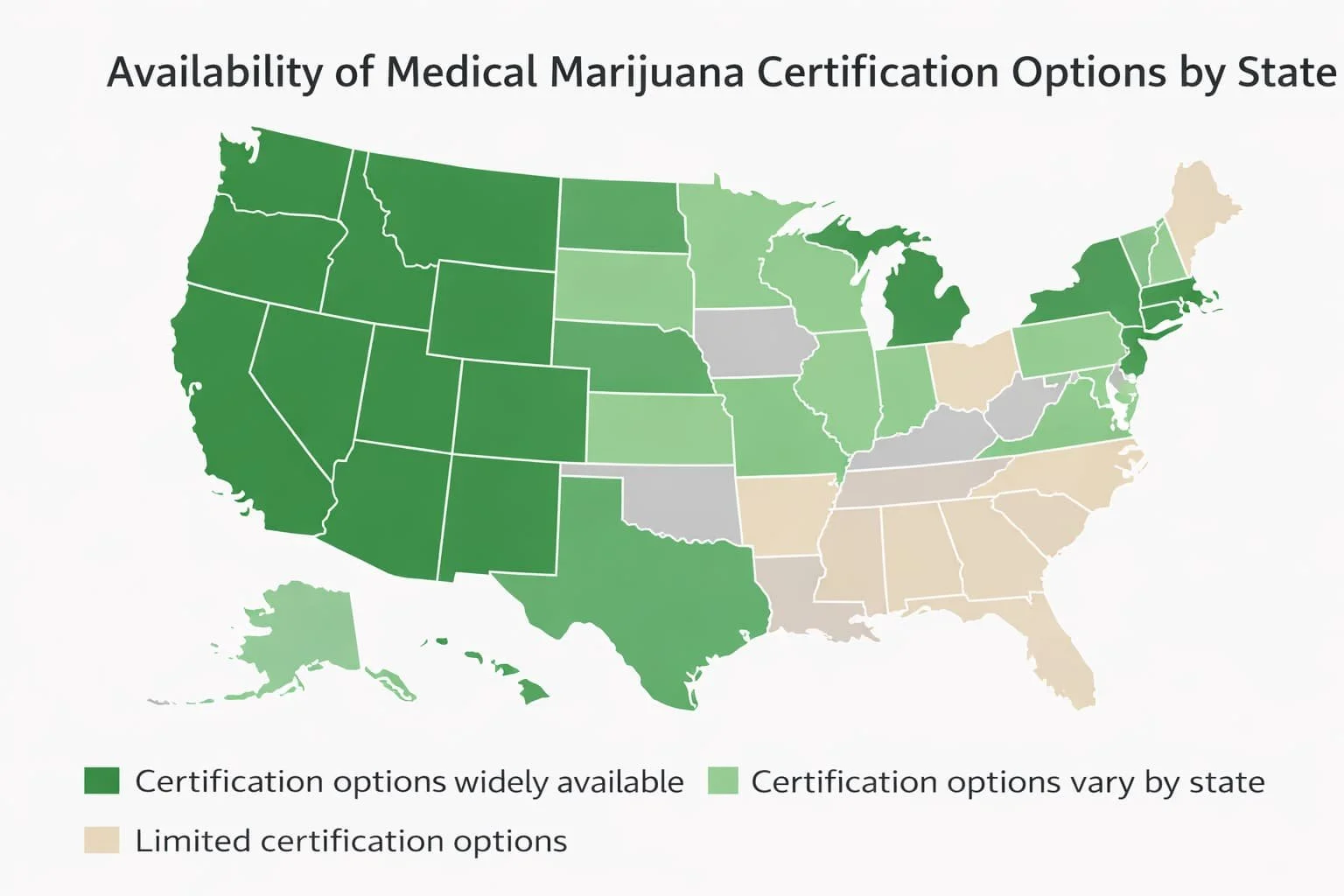
Below is a high-level look at states where patients often experience rapid progress after physician approval.
Texas
Texas is one of the clearest examples of fast physician action. Patients can receive medical marijuana same day approval when a licensed doctor enters the certification directly into the state’s CURT system. There is no physical card issued, and once the physician submits the authorization, patients can proceed under state rules using their Texas Medical Marijuana Card status.
Virginia
Virginia offers one of the most flexible post-approval experiences. Many patients receive a same day medical marijuana card in the form of a digital or written certification that can be used immediately at dispensaries, even before choosing to request a physical Virginia Medical Marijuana Card, which is optional and not required for access.
Ohio
Ohio’s system emphasizes efficiency after the clinical decision is made. Patients often work with a same day MMJ doctor, and once approved, the process moves forward without a state registry fee, allowing access to treatment through the Ohio Medical Marijuana Card system with minimal delays.
States with Delayed Dispensary Access: What to Expect
In many regions, the process is a two-step journey. While the physicians on our platform can often provide an evaluation and approval in a single day, state administrative rules may require a waiting period before you can legally enter a dispensary.
Category 1: Digital Registry Processing (Short Delay)
In these states, your access begins once the state registry synchronizes your medical provider’s approval with their internal database.
Missouri: Missouri remains a leader in digital efficiency. Once approved by a physician, the state typically processes applications within a few business days. Patients can then download their digital license directly from the "Complia" portal for immediate use.
Oklahoma: Following 2026 updates (SB 1066), physicians must now be registered with the OMMA to issue recommendations. Once the application is submitted, the standard state processing time is approximately 14 days. You must wait for this digital approval before visiting a dispensary.
Arizona: Arizona operates a fully digital system. Once the physician evaluation is complete and submitted to the ADHS, patients typically receive their digital card via email within 10 business days.
Minnesota: Once the physician certification is issued by the physicians on our platform, Minnesota patients can expect an average processing time of just 72 hours. The state has streamlined its digital verification process, making it one of the fastest in the country.
West Virginia and Connecticut: These states prioritize digital systems. However, once the physician certification is issued, patients should plan for a 1-to-2-week wait while the state completes the formal registration and verification process.
Category 2: Physical Card & Mail Delivery
Some states still rely on physical ID cards, which adds a delivery window to your timeline.
Pennsylvania: Pennsylvania remains a state where the physical card is the only legal way to purchase medical marijuana. Once you complete your evaluation and pay the state fee, the card is mailed to your address, usually arriving within 7 to 10 business days.
Georgia: Georgia’s system for Low-THC oil cards is unique. Once certified and the fee is paid via the secure portal, cards are typically mailed via UPS and require a signature for delivery. Note that in 2026, these cards are valid for five years.
Category 3: Newly Launched Programs
Kentucky: As of January 2026, Kentucky’s medical cannabis program is officially live. Licensed dispensaries are now open in Louisville, Lexington, and Beaver Dam. Once approved by a physician, patients complete state registration; access begins as soon as the state issues the official ID card.
States Where Same-Day Access Is Limited (And Why)
Not every state is built for instant access, and that’s not a failure of the system. In states where same-day access is limited, the process is still clear and patient-friendly, just structured with additional safeguards.
Common reasons some states take longer include:
Physical card requirements: Some states issue a physical medical marijuana card that must be printed and mailed before dispensary access begins. Even with same-day physician approval, patients must wait for delivery.
State-level review periods: Certain programs require manual verification of identity, residency, or documentation. This adds a short processing window, but helps ensure accuracy and legal protection.
Additional verification steps: States may cross-check patient data, caregiver information, or physician submissions before activating access. These steps exist to prevent errors, not to create barriers.
The key point: limited same-day access does not mean complicated access. In these states, patients still follow a straightforward path—evaluation, approval, registration, access, just on a slightly longer timeline. Knowing this upfront prevents frustration and helps you plan realistically instead of chasing timelines the state simply doesn’t allow.
How to Get Approved as Fast as Possible
While no provider can override state timelines or make guarantees, patients can take smart steps to move through the process as efficiently as possible, especially in states where systems are already moving faster.
Here’s what consistently helps:
1. Prepare Your Medical Records
Having documentation ready, diagnosis history, prior treatments, or specialist notes, allows physicians to evaluate eligibility quickly and confidently.
2. Use Telemedicine Where Allowed
Telemedicine often eliminates scheduling delays, travel time, and administrative bottlenecks. In many states, it’s the fastest route to physician evaluation.
3. Choose Providers Who Submit Directly to State Systems
Speed often improves when your physician enters certification directly into the state registry instead of handing off paperwork for later submission. Fewer handoffs mean fewer delays.
4. Respond Quickly to State Emails
Many delays happen after approval, not before. States may send verification emails, payment requests, or confirmation links. Responding promptly can shave days off the process.
5. Understand Your State’s “Fastest Possible” Timeline
Knowing what’s realistically achievable in your state helps you plan appropriately, and avoids unnecessary stress.
This is where CannabisMD TeleMed adds value. While the state controls the final timeline, CannabisMD TeleMed simplifies the physician side of the process by offering compliant evaluations, direct submissions where allowed, and clear guidance on next steps, so nothing slows you down unnecessarily.
Final Thoughts: Speed Without Guesswork
Same-day approval is real in many states, but only when expectations match how the system actually works. The fastest results happen when patients understand the difference between physician approval, state processing, and dispensary access. When those steps are clear, frustration disappears.
Speed isn’t about finding shortcuts or believing bold promises. It’s about knowing your state’s structure, preparing your information, and choosing providers who work directly within the system instead of around it. In states built for rapid activation, progress can happen quickly. In others, a short wait is simply part of the design, not a failure.
The good news is this: medical marijuana programs are built to be navigable, not confusing. Patients who understand the process almost always move through it smoothly, and often faster than expected. While each state has its own rules, once you are ready to begin, scheduling your Virginia medical marijuana evaluation helps ensure you follow the proper legal and medical protocols from day one, regardless of where you start your journey.
Fast does not mean rushed.It means prepared.
Frequently Asked Questions
-
Sometimes, but it depends on what you mean by “card.” In many states, patients can receive same-day physician approval after completing their evaluation. However, a physical card, state activation, or dispensary access may still take additional time. The fastest part of the process is almost always the medical decision, while the state system determines when your approval turns into usable access.
-
States known for faster physician approval include Texas, Virginia, Ohio, and Oklahoma. In these states, doctors can often approve patients the same day, and certifications are entered directly into state systems or usable immediately. Final access still depends on each state’s registry or confirmation process.
-
Not always. In some states, same-day approval allows immediate access using a digital or written certification. In others, patients must wait for state registry confirmation or a physical card before purchasing. Approval and access are connected, but they are not always the same step.
-
Yes, in many states. Telemedicine is widely used for medical marijuana evaluations, but availability depends on state law. Some states allow fully remote evaluations, while others require in-person visits or limit telehealth use under specific conditions.
-
Timelines vary because each state designs its medical cannabis program differently. Factors include whether the state uses digital registries, requires physical cards, mandates additional verification, or conducts manual reviews. These differences reflect program structure, not the quality of the provider or physician.