
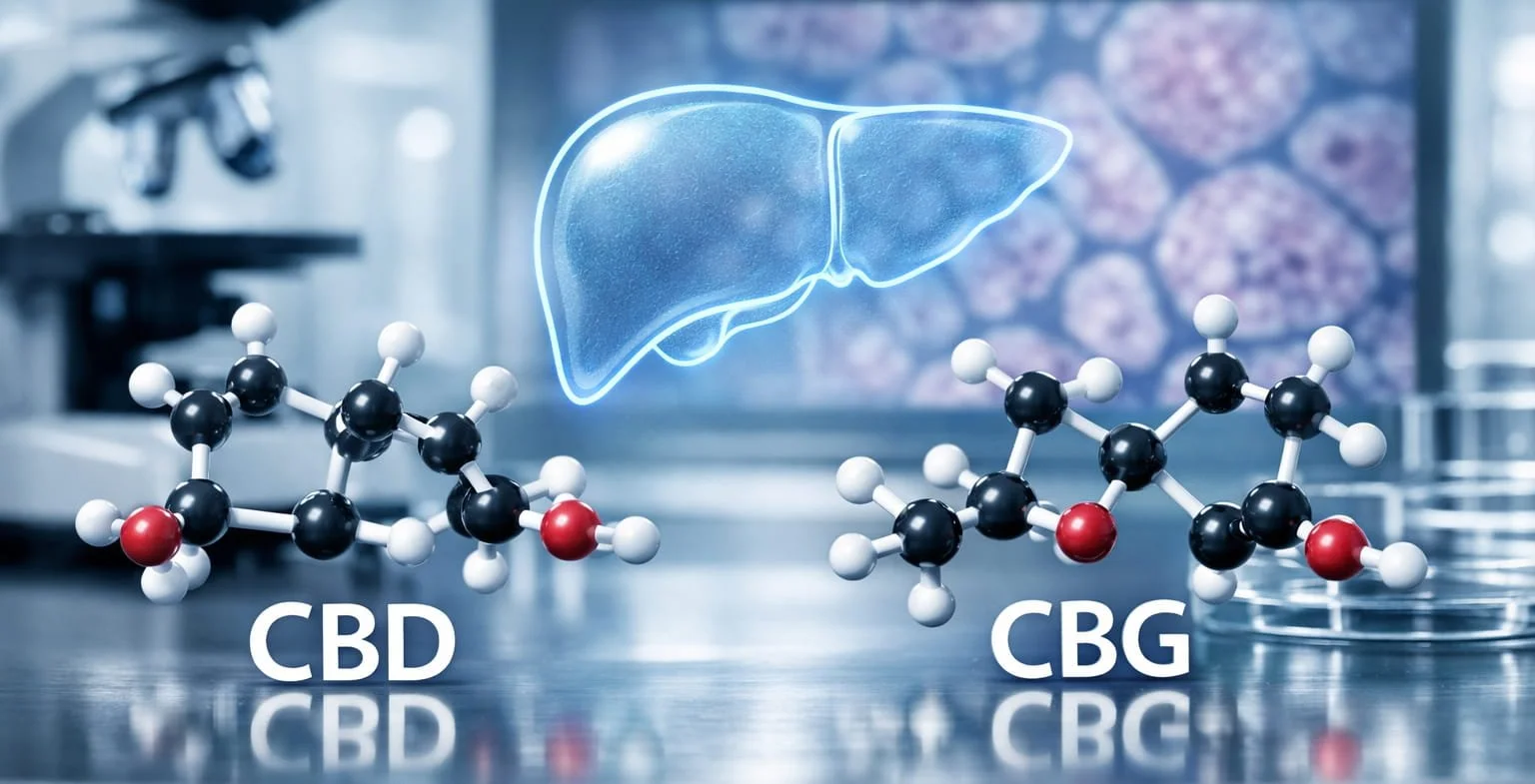
A new cannabis study is getting attention for a reason.
Researchers at the Hebrew University of Jerusalem reported that two non-intoxicating cannabinoids, CBD and CBG, reduced liver fat and improved several metabolic markers in a mouse model of MASLD, the condition many people still call fatty liver disease. The paper was published in British Journal of Pharmacology in March 2026.
That does not mean CBD or CBG are now a proven treatment for people with liver disease.
It does mean scientists may be getting a clearer picture of how certain cannabinoids affect metabolism, energy use inside the liver, and the way cells clear out harmful buildup. That matters because MASLD is common, hard to manage, and still has no widely established drug treatment that neatly solves the problem for most patients.
What is MASLD, and why are researchers paying so much attention to it?
MASLD stands for metabolic dysfunction-associated steatotic liver disease. It is now considered the most common chronic liver disorder worldwide and is closely tied to obesity, insulin resistance, abnormal cholesterol levels, and broader metabolic dysfunction. Several reports tied to this new study describe it as affecting about one in three adults.
A lot of people have it and do not know it.
Some find out only after abnormal lab work, imaging, or symptoms tied to more advanced liver stress. In everyday practice, the standard advice usually centers on weight loss, food choices, physical activity, and tighter metabolic control. That advice matters, but it is also where many patients get stuck. Long-term lifestyle change is hard. Researchers know that. That is one reason studies like this get so much attention.
Metabolic conditions often create challenges beyond physical symptoms alone. People dealing with chronic inflammation, fatigue, lifestyle changes, or long-term health conditions frequently explore cannabis for patients with co-occurring mental and physical conditions when multiple symptoms begin affecting everyday life.

What exactly did the 2026 study test mean?
The study looked at CBD and CBG, two cannabinoids that do not produce the classic intoxicating "high" associated with THC. If you are new to CBD specifically, our comprehensive guide to cannabidiol covers the basics in full. The researchers tested both compounds in obese mice with steatotic liver disease and then analyzed what changed inside the liver and across several metabolic markers.
The headline result was simple enough: both compounds were associated with less liver fat.
The more interesting part was what sat underneath that result.
According to the study and university summaries, the researchers saw changes in how the liver handled energy stress and how it processed cellular waste. They also reported improvements in glucose-related measures and reductions in harmful lipid species linked to metabolic disease.
What changed inside the liver?
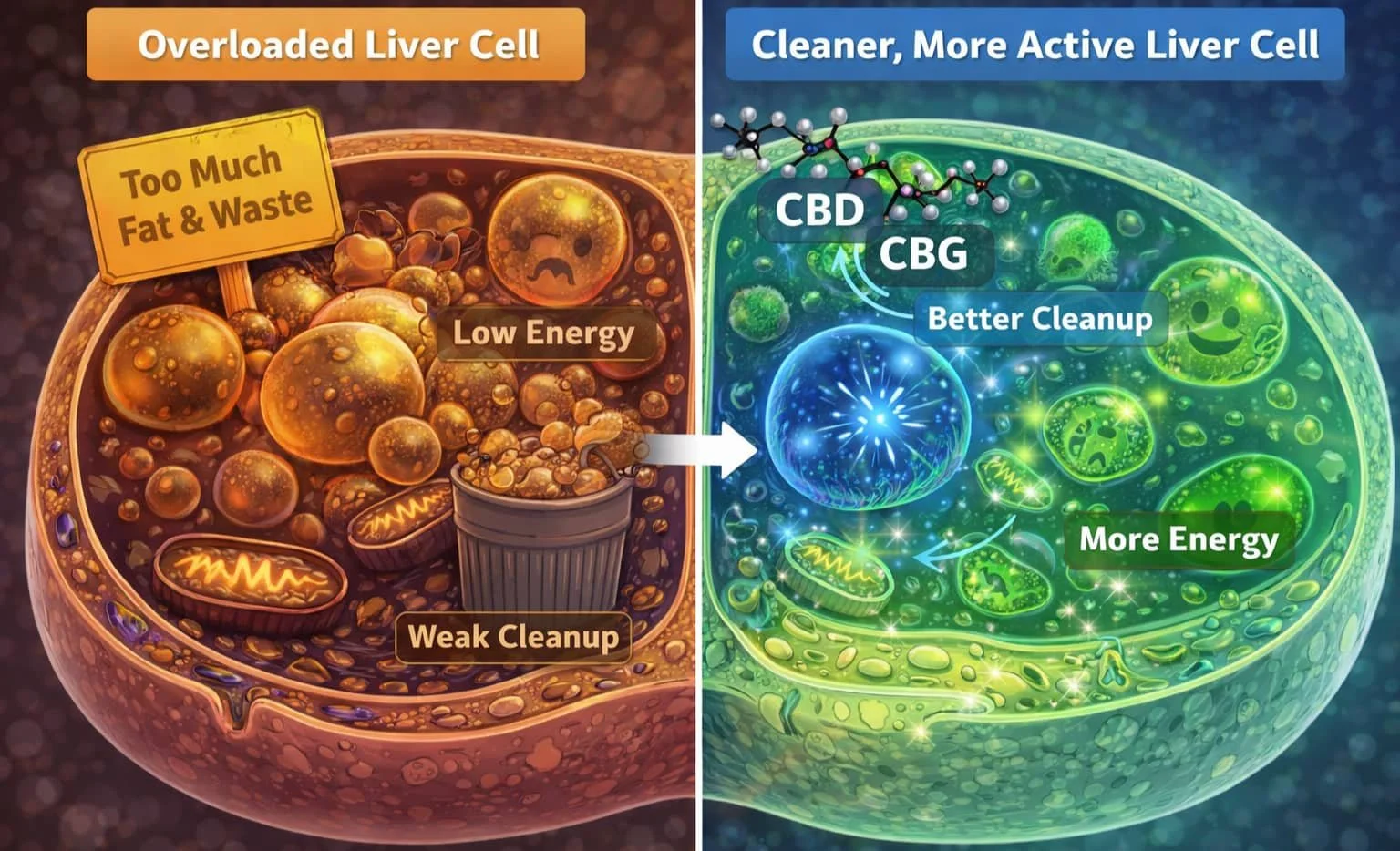
This is where a lot of science writing gets messy, so let's keep it plain.
The researchers did not just report that liver fat went down. They proposed two deeper mechanisms.
First, they found evidence tied to phosphocreatine buffering. In simple terms, the liver appeared to gain a better short-term energy reserve under metabolic stress. That matters because a metabolically overloaded liver is not just storing extra fat. It is also struggling to keep up with energy demand and internal repair work.
Second, the study linked CBD and CBG to lysosomal restoration and renewed activity of enzymes called cathepsins. Lysosomes help cells break down and recycle unwanted material. When that system is not working well, waste and lipid buildup become a bigger problem. The authors suggest these cannabinoids helped restore part of that cleanup process.
That is a lot more interesting than a generic "reduced liver fat" headline.
It suggests researchers are looking at cannabinoids not just as surface-level symptom modifiers, but as compounds that may affect deeper metabolic pathways.
What improved besides liver fat?
The study and related summaries point to a few other notable changes.
Both CBD and CBG were associated with improved blood sugar handling and lower levels of harmful lipids, including triglycerides and ceramides. Ceramides matter because they are often discussed in connection with insulin resistance and metabolic dysfunction.
The researchers also reported that CBG appeared stronger on some measures. In the coverage tied to the study, CBG showed a more pronounced effect on body fat mass, insulin sensitivity, and certain cholesterol markers, including LDL cholesterol. That does not make CBD unimportant. It just means the two compounds did not behave in exactly the same way.
That is the kind of detail worth keeping.
Too many cannabis articles flatten everything into "good result, exciting future." This one was more nuanced than that.

CBD vs. CBG: are they basically the same?
No. They are both cannabinoids. They are both non-intoxicating. But they are not interchangeable.
CBD is far more familiar to the public. CBG is still a lesser-known cannabinoid, even though researchers have become increasingly interested in it. In this study, both compounds were linked to meaningful metabolic changes, but CBG stood out more in several categories.
That does not mean CBG is now "better" across the board.
It means this specific preclinical paper gave researchers another reason to keep studying it.
Although early research findings may look promising, product quality remains one of the biggest variables affecting patient experiences. This is why many people exploring cannabinoids also research choosing quality CBD and CBG products backed by testing before purchasing oils, gummies, capsules, or tinctures.
Who conducted the research?
The study was led by researchers at the Hebrew University of Jerusalem, including Prof. Joseph Tam, Dr. Liad Hinden, and Radka Kočvarová, and it was published in British Journal of Pharmacology in March 2026. The university and related summaries present it as peer-reviewed research, not just a media write-up.
That part matters.
There is a big difference between a social media headline, a wellness blog making promises, and a peer-reviewed paper with a DOI.
This one has a DOI.
What this study does not prove
This section matters more than the headline.
The research was done in mice, not in human patients. The authors and university materials do not present this as proof that CBD or CBG currently treat MASLD in people. They present it as promising preclinical evidence and a rationale for future human research.
So no, this is not a green light to reach for over-the-counter CBD products and expect clinical results. The difference between unregulated supplements and physician-supervised medical cannabis is significant - which is exactly why working with a licensed provider matters..
The study does not define the right dose, formulation, or treatment duration for humans - those are questions for clinical trials. What it does confirm is that cannabinoid research is advancing in a serious, peer-reviewed direction. For patients who want medically supervised access now, that context matters.
Why this study still matters
Because it is pointing to something more specific than hype.
A lot of cannabis content online is built around broad lifestyle language, vague "wellness" claims, or recycled symptom talk. This paper is different. It is focused on a real disease model, measurable biochemical pathways, and a condition that affects a huge number of people.
Notably, the Hebrew University has already filed a patent on the CBD-CBG combination for metabolic disorders, signaling the research team's intent to pursue clinical trials.
That makes it worth watching.
Not because it "proves cannabis works for fatty liver disease."
It doesn't.
It matters because it gives researchers a more detailed map of where non-intoxicating cannabinoids may fit into metabolic disease research next.
What this means for patients right now
For now, the most important takeaway is this: cannabinoid science is moving in a serious direction, and patients who want legal, physician-supervised access do not need to wait for clinical trials to catch up.
If you are reading this as a patient, the study is not a treatment instruction. It is not a substitute for liver testing, medical advice, or a proper diagnosis. What it does offer is a clearer sense of where cannabinoid science is moving, especially around non-intoxicating compounds such as CBD and CBG.
That matters for two groups in particular.
First, people who follow cannabinoid research closely and want to understand where the science is getting more serious.
Second, medical cannabis patients who are trying to separate hype from actual published evidence. For a closer look at how cannabis interacts with the liver specifically, including what happens when cannabinoids are processed after ingestion, see how cannabis edibles affect the liver.
This study belongs in the second category…the science is moving. If you have been considering a medical marijuana card, this is the kind of research that confirms you are not alone in taking cannabinoid medicine seriously.
Final takeaway
There is a reason this study is getting picked up.
MASLD is common. It is frustrating. And there is still a major gap between how often the disease shows up and how many good treatment options patients feel they actually have. In that context, a peer-reviewed paper showing that CBD and CBG reduced liver fat and improved several metabolic markers in a mouse model is not a small story.
It is also not a miracle.
The smart read is this: the study gives researchers a credible new lead, not a finished answer.
That is enough to make it worth your attention.
Patients in Virginia and across multiple states can get certified through a licensed physician in under 15 minutes online.
Start your medical marijuana certification here →
Sources
Kočvarová R, et al. Cannabidiol and cannabigerol ameliorate steatotic liver disease via phosphocreatine buffering and lysosomal restoration. British Journal of Pharmacology, March 2026. DOI: 10.1111/bph.70387
Hebrew University of Jerusalem - Cannabis compounds show promise in fighting fatty liver disease
ScienceDaily - Cannabis Compounds CBD and CBG Slash Liver Fat and Restore Metabolic Health
FAQs
-
No. CBD is generally described as a non-intoxicating cannabinoid, and the same is true for CBG in the context of this study. For a full breakdown of what CBD is and how it works, see our cannabidiol guide.
-
No. This was a preclinical mouse study published in British Journal of Pharmacology in March 2026.
-
No. The study found reduced liver fat and improved metabolic markers in a mouse model. It does not prove that CBD or CBG cure MASLD in humans.
-
Both were associated with benefits, but CBG appeared to perform better on some measures, including body fat, insulin sensitivity, and certain cholesterol markers.
-
Because it is extremely common, linked to broader metabolic dysfunction, and difficult to manage over time. Multiple summaries tied to this study describe it as affecting about one-third of adults.