Medical Marijuana for Autoimmune Disease: Can Cannabis Help - and Can You Qualify in Virginia?

Living with an autoimmune disease means your immune system is working against you. Whether it is the relentless joint pain of rheumatoid arthritis, the neurological disruptions of multiple sclerosis, the skin flares of lupus, or the gut inflammation of Crohn's disease - the daily burden is real, unpredictable, and often only partially managed by conventional treatments.
If you are a Virginia resident, you may qualify for a medical marijuana card. Virginia does not use a rigid list of approved diagnoses. Licensed providers evaluate how your condition affects your quality of life - and autoimmune conditions with chronic pain, inflammation, fatigue, or sleep disruption are among the most common reasons patients are certified.
Does Marijuana Affect the Immune System?
This is the most common question people with autoimmune disease ask before considering cannabis - and it deserves a direct answer.
Cannabinoids such as THC and CBD interact with the body's endocannabinoid system (ECS), which plays a regulatory role in immune function, inflammation, and cell signaling. Unlike a simple on/off switch, cannabinoids act as immunomodulators - meaning they help regulate immune activity rather than simply suppressing or boosting it across the board.
For autoimmune conditions, where the immune system is overactive and attacking healthy tissue, this modulating effect is exactly what makes cannabis worth discussing with a provider. Research published in journals such as Frontiers in Immunology and Cannabis and Cannabinoid Research suggests that cannabinoids may help reduce the production of pro-inflammatory cytokines - signaling proteins involved in autoimmune inflammation seen in conditions like rheumatoid arthritis, multiple sclerosis, and lupus.
The short answer: marijuana does not simply "weaken" or "boost" the immune system (it interacts with it selectively). For most autoimmune patients, that distinction is clinically meaningful.
Does Marijuana Make Autoimmune Disease Worse?
This is the question most people search for but few pages answer honestly - so here it is.
For the majority of autoimmune conditions characterized by chronic inflammation and overactive immune response, the immunosuppressive properties of THC are generally considered potentially beneficial, not harmful. Studies on conditions like rheumatoid arthritis, Crohn's disease, and MS have shown that cannabis may help reduce inflammatory markers and symptom severity.
That said, the answer is not the same for every person or every condition:
High THC doses may cause anxiety or cardiovascular stress in sensitive individuals, which can indirectly worsen symptom perception
Smoked cannabis introduces respiratory irritants that may not be appropriate for patients with lung-related autoimmune conditions
Some immunosuppressive medications used in autoimmune treatment may interact with cannabis - always disclose your full medication list to your evaluating provider
The safest and most accurate answer: whether cannabis is appropriate for your specific autoimmune condition depends on your diagnosis, your current treatment plan, and your symptom profile. A licensed provider evaluation is the only way to get a personalized answer.
How Cannabis May Help with Autoimmune Disease Symptoms
The following represents areas where cannabinoids are actively being studied and where patient-reported outcomes are most consistent. All statements use cautious framing - cannabis is not a cure for autoimmune disease and should not replace your existing treatment plan.
Reducing Chronic Inflammation
Inflammation is the engine behind most autoimmune symptoms. CBD in particular has been studied extensively for its anti-inflammatory properties, with research suggesting it may inhibit key inflammatory pathways including NF-κB signaling and cytokine production. For patients with conditions like lupus, RA, or inflammatory bowel disease, reducing systemic inflammation may translate to fewer flare-ups and lower baseline pain.
Managing Chronic Pain
Pain in autoimmune disease is often neuropathic, inflammatory, or both - and it frequently does not respond well to standard over-the-counter options. Cannabinoids may modulate pain perception at the central nervous system level, offering relief that complements rather than replaces existing pain management. Patients with RA and lupus report this as one of the most consistent benefits.
Improving Sleep
Fatigue and disrupted sleep are near-universal in autoimmune disease. When pain and inflammation keep patients awake, the immune dysregulation often worsens. Cannabis - particularly indica-leaning and CBD-dominant products used in the evening - may help patients fall asleep faster and stay asleep longer, creating a positive cycle of better rest and reduced flare severity.
Reducing Anxiety and Depression
Living with a chronic, unpredictable illness carries significant psychological weight. Depression and anxiety are diagnosed at substantially higher rates in autoimmune patients than in the general population. CBD-dominant cannabis products are frequently discussed in the context of mood regulation and stress reduction, without the cognitive side effects associated with some pharmaceutical options.
Appetite and Digestive Support
For patients with Crohn's disease, ulcerative colitis, or other autoimmune conditions affecting the gut, cannabis may help reduce nausea, stimulate appetite, and calm intestinal inflammation. THC is well-documented for its appetite-stimulating effects, while CBD is being studied for its role in gut barrier function.
| Question | What Current Research Suggests |
|---|---|
| Does weed weaken the immune system? | THC has immunosuppressive properties. In autoimmune conditions, this immune modulation may be viewed differently than in healthy individuals. |
| Does weed help the immune system? | Current research suggests cannabis may modulate immune activity rather than simply strengthen or suppress the immune system. |
| Does THC lower the immune system? | THC may reduce overactive immune responses and inflammatory signaling pathways in certain autoimmune-related studies. |
| Does CBD affect the immune system? | CBD has shown anti-inflammatory effects in multiple studies through cytokine and immune-response modulation. |
| Is smoking weed bad for autoimmune disease? | Smoking introduces respiratory irritants. Many patients prefer tinctures, edibles, capsules, or topicals instead of inhaled cannabis products. |
| Can cannabis interact with autoimmune medications? | Yes. Cannabis may interact with immunosuppressants, sedatives, antidepressants, and other medications. Patients should always disclose their current medication list during an evaluation. |
**This table reflects current research trends and should not be interpreted as medical advice. Individual responses to cannabis vary.
Does Autoimmune Disease Qualify for a Medical Marijuana Card in Virginia?
Yes - autoimmune disease may qualify for a medical marijuana card in Virginia. Virginia law allows licensed practitioners to certify any patient whose condition they believe would benefit from medical cannabis. There is no fixed list of required diagnoses.
Autoimmune conditions most commonly evaluated for certification include:
Rheumatoid Arthritis - chronic joint inflammation and pain
Multiple Sclerosis - spasticity, nerve pain, fatigue
Lupus (SLE) - systemic inflammation, joint pain, sleep disruption
Crohn's Disease and Ulcerative Colitis - gut inflammation, pain, appetite loss
Psoriasis and Psoriatic Arthritis - skin inflammation, joint involvement
Hashimoto's Thyroiditis - fatigue, pain, mood changes
Type 1 Diabetes - inflammation-related complications
Evaluation is worth pursuing if:
Your autoimmune symptoms are not fully controlled by current medications
Chronic pain, fatigue, or sleep disruption significantly affects your daily life
You are looking for a non-opioid option to complement your existing treatment
You prefer a telehealth process - no driving, no waiting rooms, available from home
You want same-day certification with a money-back guarantee if not approved
What Cannabis Products Do Autoimmune Patients Commonly Discuss?
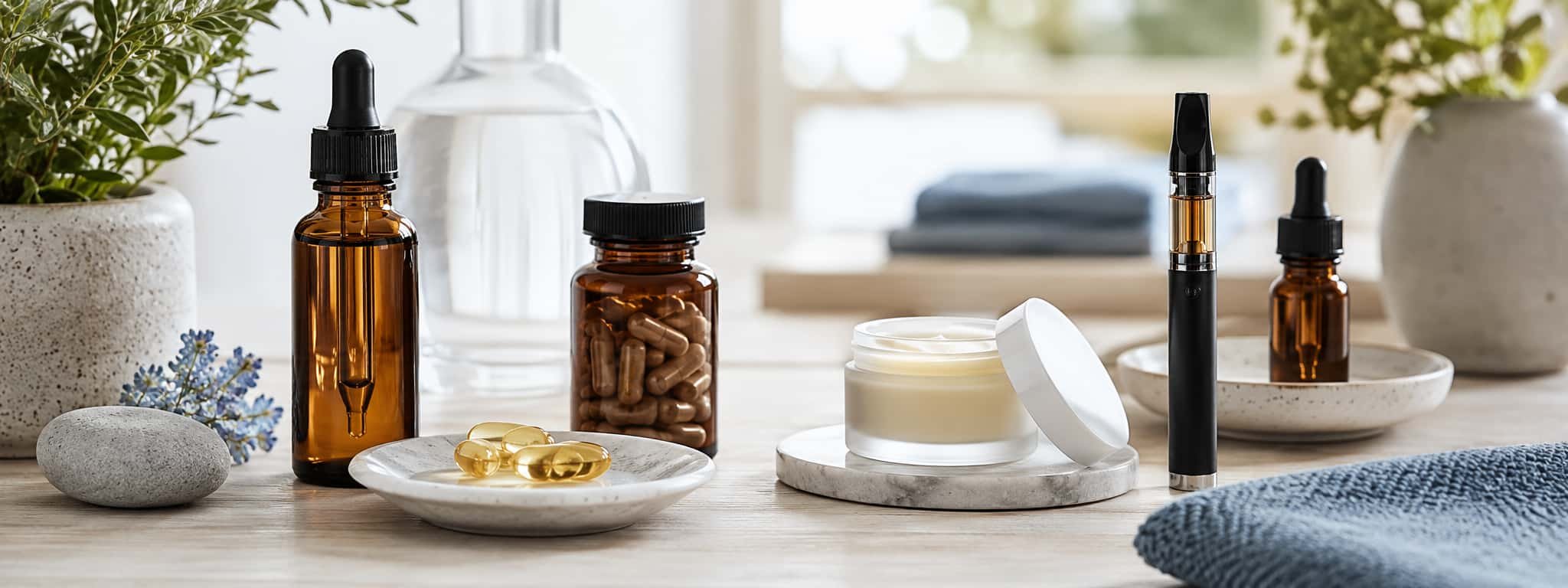
The right product format depends on your specific symptoms, when they occur, and how your body responds. Your evaluating provider and the pharmacists at any licensed Virginia dispensary can help you narrow this down after certification.
For Inflammation and Daytime Symptom Management
CBD-dominant tinctures and capsules are the most common starting point. They allow for consistent dosing, minimal psychoactive effect, and can be taken during the day without impairing function. Low-THC options are frequently discussed for patients who need to stay alert and productive.
For Pain and Sleep at Night
Balanced THC:CBD products (edibles or capsules taken in the evening) are frequently discussed for patients dealing with pain-related sleep disruption. The longer onset and extended duration of edibles makes them practical for nighttime use without re-dosing.
For Localized Inflammation and Joint Pain
Topical cannabis creams and balms are commonly used by patients with rheumatoid arthritis, psoriatic arthritis, and lupus for localized joint and skin symptoms. Topicals do not produce psychoactive effects and do not require a provider's ongoing supervision for dosage adjustment once certified.
For Acute Flares
Sublingual tinctures and vaporizers offer faster onset than edibles - useful when a sudden flare requires more immediate relief. Tinctures placed under the tongue typically take effect within 15-30 minutes.
** Every autoimmune condition is different. A licensed provider evaluation is the best starting point for identifying which product formats make sense for your specific diagnosis and symptom profile. **
How to Get a Medical Marijuana Card for Autoimmune Disease in Virginia
The entire process is available via telehealth - no travel required.
Book your appointment online - choose a time that works for your schedule
Meet with a licensed Virginia cannabis provider via secure video call
Discuss your diagnosis, symptoms, and treatment history - the provider evaluates whether cannabis would benefit your specific situation
Receive your certification the same day in most cases - valid immediately at any licensed Virginia dispensary
Visit a dispensary and speak with a pharmacist about products suited to autoimmune symptoms
Most patients receive same-day certification. If you are not approved, you receive a full refund of your appointment fee.
Frequently Asked Questions
Does autoimmune disease qualify for a medical marijuana card in Virginia?
Yes. Virginia allows licensed providers to certify patients with any condition they believe would benefit from cannabis. Autoimmune conditions with chronic pain, inflammation, fatigue, or sleep disruption are among the most commonly certified.
Does marijuana make autoimmune disease worse?
For most autoimmune conditions, the immunomodulatory and anti-inflammatory properties of cannabis are considered potentially beneficial. However, responses vary by condition, dosage, and delivery method. A licensed provider can evaluate whether cannabis is appropriate for your specific diagnosis.
Does weed affect or weaken the immune system?
Cannabis does not simply suppress the immune system. THC and CBD interact with the endocannabinoid system to modulate immune activity - a distinction that is particularly relevant for autoimmune patients, where the goal is to calm an overactive immune response rather than eliminate immune function.
What cannabis products are best for autoimmune disease?
There is no single answer - it depends on your specific condition and symptoms. CBD-dominant products are most frequently discussed for inflammation and anxiety. Balanced THC:CBD options come up most often for pain and sleep. Topicals are common for localized joint or skin symptoms.
Is it safe to use cannabis alongside autoimmune medications?
Cannabis may interact with certain medications, including immunosuppressants, corticosteroids, and some antidepressants. Always disclose your complete medication list to your evaluating provider before starting any cannabis regimen.
How fast can I get certified with CannabisMD TeleMed?
Most patients receive their certification the same day as their evaluation appointment. The consultation takes approximately 10-15 minutes via telehealth. If you are not approved, you receive a full refund.