
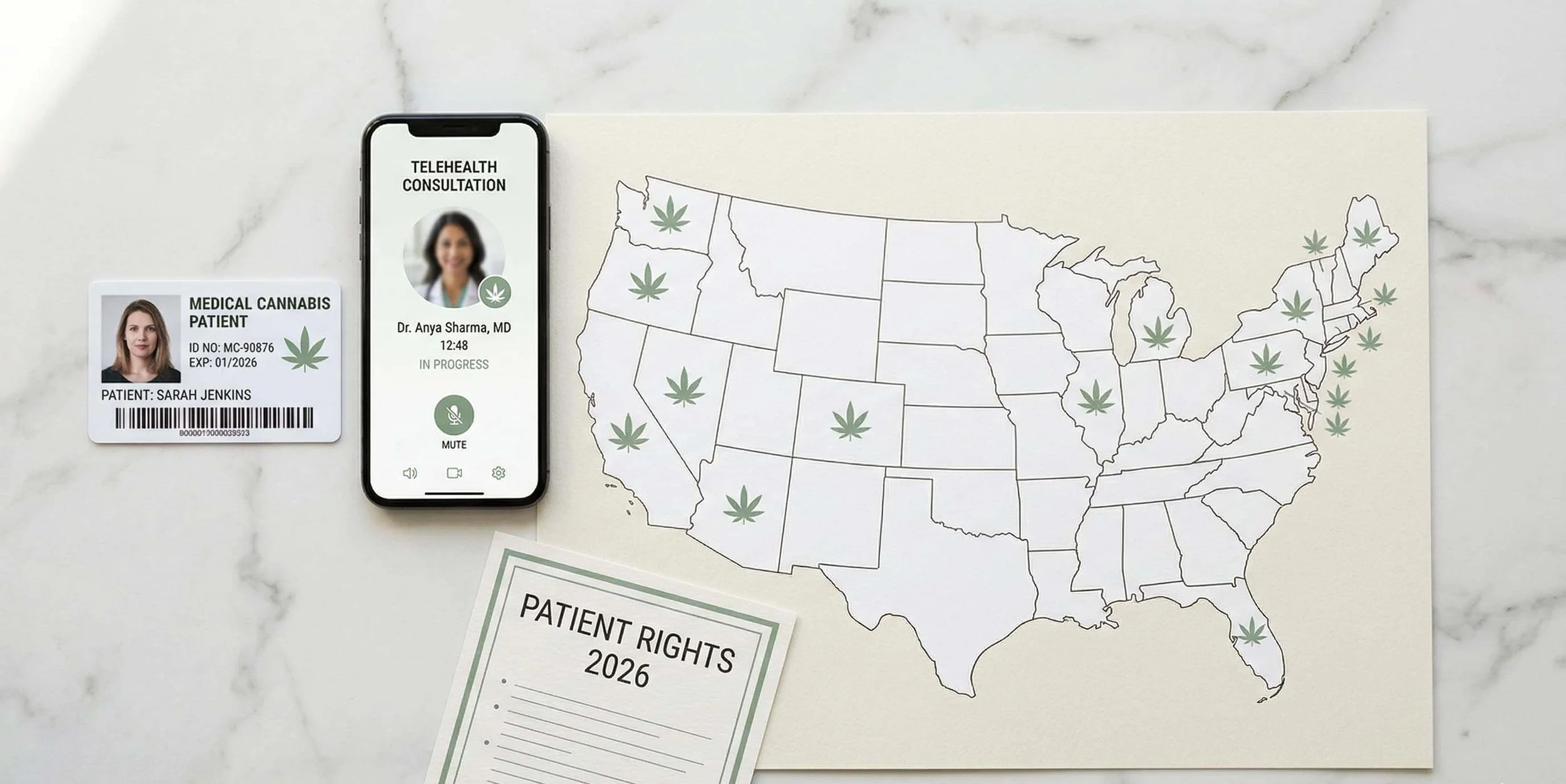
Yes. Medical marijuana is legal in over 38 states in 2026. While many states now allow recreational use, the medical card may provide additional legal protections in certain states compared to recreational use and lower taxes. Once a doctor approves your certification, you gain rights that regular buyers do not have.
See how much you could save with a medical card
Why a Medical Card is Better Than "Recreational" in 2026
Many consumers believe that living in a "legal" state means a medical card is no longer necessary. However, the legal landscape in 2026 shows a massive gap between casual adult-use and protected medical access.
Must read: Medical marijuana card eligibility by state
The Legal Shield
The most significant advantage of a medical card is employment security. In states like Virginia, House Bill 1862 provides a specific legal shield for registered patients. Under this law, in certain cases, employers may not take adverse action solely based on a positive test, depending on job type and applicable laws if that worker is a registered medical patient.
In contrast, recreational users remain "at-will" consumers. Without the clinical status provided by a medical card, an individual can still be fired for off-duty use in the majority of states. For anyone with a career to protect, the medical certification is a necessary insurance policy.
The Money: The 80/20 Rule
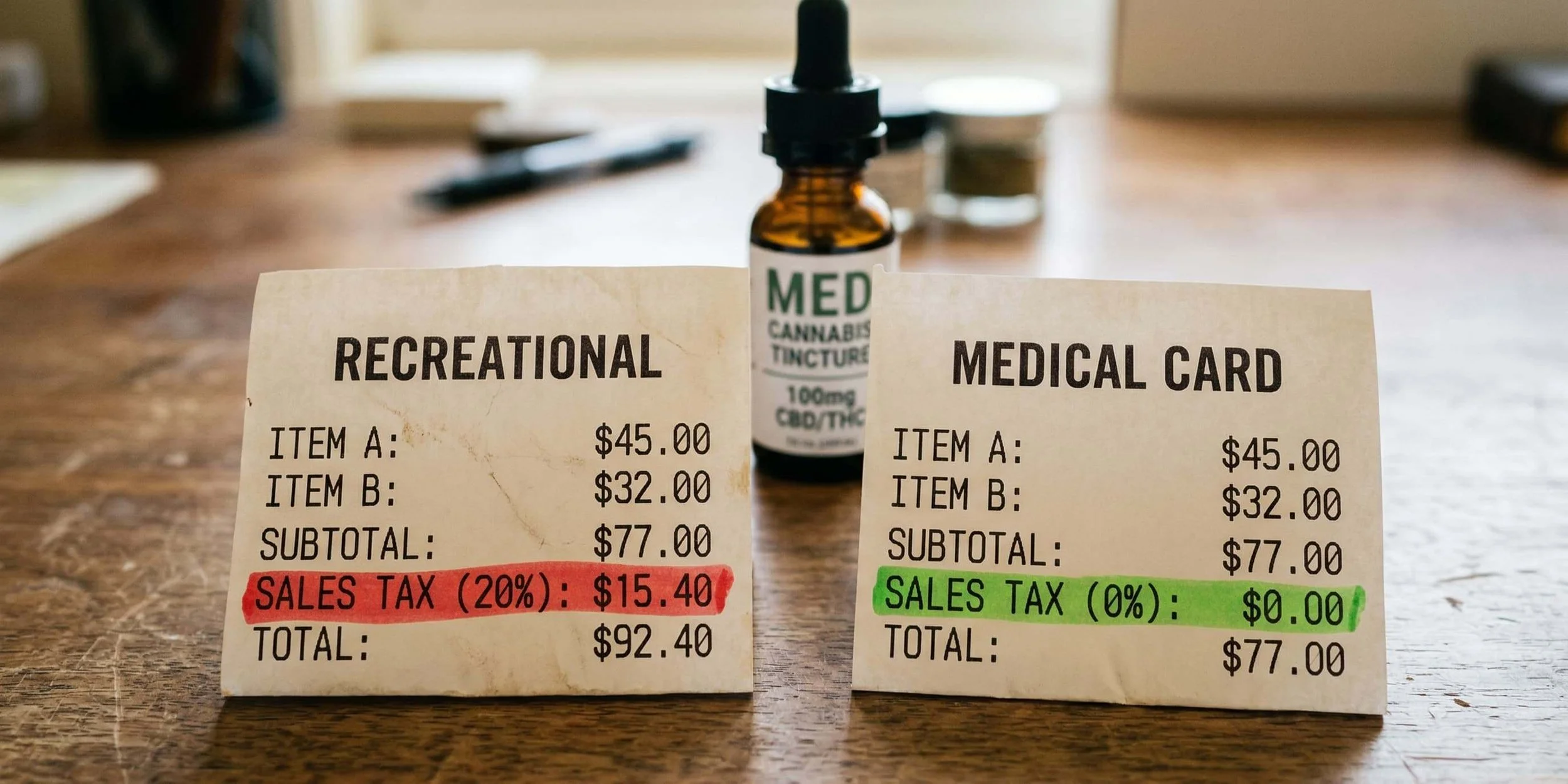
Financial savings drive the transition from recreational to medical for most long-term users. We follow the 80/20 rule: 80% of the long-term benefits of a card come from its tax-free status.
Recreational Buyers: Often pay between 15% and 20% in state and local excise taxes.
Medical Patients: Typically pay 0% to 5% tax depending on the state.
Expert Tip: In our experience, patients save enough on taxes in the first three months to pay for the card itself.

2026 State Access and Protection Matrix
The following table outlines the current landscape for medical marijuana laws by state and highlights why patients continue to choose clinical access over the retail market.
| State | Specific Qualifying Conditions? | Qualifying Logic | Card Validity | State Fee | Key 2026 Patient Benefit |
|---|---|---|---|---|---|
| Virginia | No | Physician discretion: no fixed list | 1 year | $0 | HB 1862 job protection for patients |
| Texas | Yes | Certain qualifying conditions under CUP | 1 year | $0 | Instant CURT digital registry access |
| Pennsylvania | Yes | 23 conditions including Anxiety/PTSD | 1 year | $50 | Only legal way to use cannabis in PA |
| Ohio | Yes | Chronic pain, PTSD, cancer & 25+ more | 1 year | $0 | Telehealth availability is subject to current state regulations and provider compliance |
| Oklahoma | No | Physician discretion: no fixed list | 2 years | $100 | Lowest card cost in the region |
| Minnesota | Yes | Pain, PTSD, Autism, Cancer & others | 3 years | $0 | Home delivery may be available in certain regions depending on licensed providers |
| Kentucky | Yes | Pain, Epilepsy, MS, PTSD, Cancer | 1 year | $25 | One of the lowest state fees in the US |
| West Virginia | Yes | Pain, PTSD, Cancer, Crohn's | 1 year | $50 | Registered caregiver participation available |
| Arizona | Yes | Specific ADHS list | 2 years | $150 | Full medical tax exemption |
| Connecticut | Yes | Pain, PTSD, Cancer, Parkinson's | 1 year | $0 | Exempt from 3% retail surcharge |
| Maryland | No | Physician discretion: no fixed list | Physician certification: typically 1 year State registration: up to 6 years | $0 | Medical patients avoid adult-use cannabis tax |
| Missouri | No | Physician discretion: no fixed list | 3 years | $25-$30 | Longest validity + lowest state fee |
| New York | No | Physician discretion: no fixed list | 1 year | $0 | $0 state fee policy |
| Georgia | Yes | Defined qualifying condition list | 5 years | $25 | Longest card validity in the U.S. |
| New Jersey | Yes | Anxiety, PTSD, Cancer & others | 2 years | $0 | Reduced taxes compared to recreational purchases |
| Florida | Yes | Chronic pain, PTSD, Cancer, Crohn's | 1 year | $75 | Only legal path: no rec market in 2026 |
State medical cannabis laws can also affect what happens outside the dispensary, especially at work. Many patients want to know does a medical card protect you from workplace drug tests, since employment rules may depend on state law, employer policy, and the type of job.
How States Handle Qualifying Conditions
Understanding what qualifies for a medical card depends entirely on your state's specific legislative framework.
Related article: How much does a medical marijuana card cost in your state
States Without a Fixed Condition List
In jurisdictions such as Virginia, Oklahoma, Missouri, and Maryland, licensed medical providers have broader discretion when evaluating patients for medical cannabis. Instead of relying strictly on a fixed list of conditions, physicians assess each patient individually based on symptoms, medical history, and potential benefit.
While some general guidance may exist, these states allow for a more flexible evaluation process compared to strictly regulated programs. Approval is determined by the provider’s professional judgment in accordance with state regulations.
States With Specific Qualifying Conditions
In states such as Texas, Pennsylvania, Ohio, Minnesota, Kentucky, West Virginia, Connecticut, New Jersey, New York, and Florida, medical cannabis access is typically based on a defined list of qualifying conditions established by state law.
Patients are generally required to have a diagnosis that aligns with one of the approved conditions, although specific requirements and interpretation may vary by state and provider.
Common qualifying conditions across many states include chronic pain, PTSD, cancer, and epilepsy, though exact eligibility criteria differ depending on local regulations.
For many new patients, the biggest question is not just whether medical cannabis is legal in their state, but whether their personal health concerns can be discussed during an evaluation. That is why we also created a separate guide on anxiety and depression as qualifying conditions for MMJ.
Clinical Validation Behind Qualifying Conditions
While state law determines the official list of qualifying conditions, those conditions are not arbitrary. Ongoing peer-reviewed research continues to support why chronic pain, PTSD, epilepsy, and inflammatory disorders remain among the most commonly approved diagnoses nationwide.
Recent findings published in the British Journal of Pharmacology (2026 clinical cannabinoid safety data) highlight the evolving understanding of cannabinoid interactions in pain modulation and metabolic health.
Similarly, Hebrew University 2026 research on CBD and CBG effectiveness continues to examine anti-inflammatory and neurological applications that align with many state-approved conditions.
Patients can also verify eligibility and registry requirements directly through official state portals, including the Virginia medical cannabis registry (Virginia.gov), Pennsylvania Department of Health medical program (PA.gov), and Oklahoma medical marijuana authority (OK.gov).
The Florida Market in 2026
It is important to note that Florida remains a medical-only state with no legal recreational market in 2026: a medical card is the only legal path to possession and access. Without a valid certification, possession without a valid medical certification may be subject to legal penalties under state law in the Sunshine State.
Registry Submission
Once the physician completes the consultation and approves the certification, the licensed providers on the platform handle the state registry submission immediately. Patients do not navigate the government portals alone. In digital registry states like Texas (CURT) and Virginia, dispensary access typically begins the same day.
Medical cannabis laws do not stop at the first approval. Patients also need to understand how long their certification lasts, when renewal is required, and what documents may be needed before access expires. We cover this in more detail in our guide to state-by-state renewal requirements for medical marijuana cards.
Your Privacy and the Law (HIPAA)
A common concern for new patients is how a medical card might affect their personal records.
Privacy: Your medical information is protected under HIPAA, though access may vary depending on legal or insurance circumstances. Being a medical patient is a private matter between you and your healthcare provider.
The Guarantee: The physicians on the platform operate with a "no-approval, no-fee" policy. We only charge for successful approvals. The process is risk-free for the patient.
Frequently Asked Questions
-
Once you get the digital certification in states like Virginia or Pennsylvania, you can shop at a dispensary the same day. Most modern states have moved away from physical plastic cards in favor of instant-access digital IDs.
-
In "Open" states like Virginia, the physicians on the platform focus on your current symptoms during the video call. While records can be helpful, they are often not a strict requirement for a consultation.
-
Despite shifts in federal oversight, telehealth remains the gold standard for medical cannabis evaluations. You can complete the entire process from home on your phone, ensuring safe and convenient access to your medicine.
RESOURCES & TRUST LINKS
Virginia General Assembly: House Bill 1862 (Patient Job Protections). https://lis.virginia.gov/bill-details/20211/HB1862
British Journal of Pharmacology (2026): Clinical data on cannabinoid safety and metabolic health. https://bpspubs.onlinelibrary.wiley.com/doi/10.1111/bph.70387
State Health Portals: Official links to PA.gov, OK.gov, and Virginia.gov medical registries.
Hebrew University Research: 2026 findings on CBD and CBG effectiveness. https://international.huji.ac.il/news/cannabis-compounds-show-promise-fighting-fatty-liver-disease